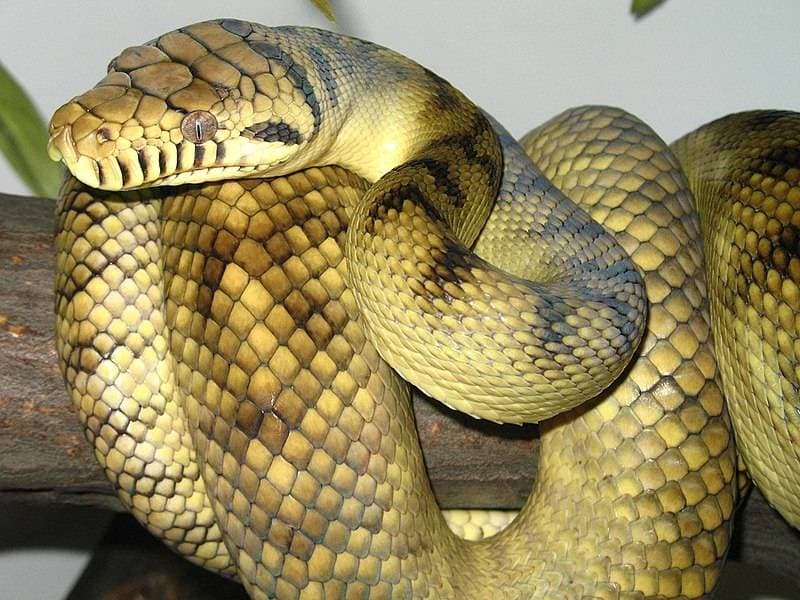
Amethystine pythons are large, nonvenomous constrictors named for the iridescent sheen of their scales. Their brown or olive coloring can look very different as the light changes. Older books use the same common name for snakes now separated into several species, so identifying the animal accurately is the first step in understanding its needs.
Which python does the name describe?
The name Simalia amethistina generally refers to the amethystine python of New Guinea and nearby islands. Australia's scrub python is Simalia kinghorni. The Australian Society of Herpetologists lists the latter with several overlapping common names. A photograph, shop label or old report may therefore describe a different species from the one a reader expects.
This also complicates claims about maximum length. Historical reports may involve different species, estimates or stretched skins rather than measured living snakes. Do not use an exceptional record as a normal adult size, or assume that every very large individual must be female. Ask for the scientific name and documented origin before comparing growth records.
Life as a large constrictor
These pythons use vegetation and other cover while moving, resting and hunting. Their climbing ability makes the height and strength of branches important in captivity. A slender-looking body does not mean a large snake is weak or easy to restrain.
Heat-sensitive pits around the lips help detect warm objects, while chemical cues and vision also contribute to finding prey. They kill by constriction rather than venom. Describing them as harmless because they are nonvenomous overlooks the strength, teeth and handling challenges of an adult animal.
Planning for lifelong care
A keeper needs experience with large snakes, secure housing and access to a veterinarian who treats reptiles. The enclosure should permit normal movement and provide supported climbing opportunities, retreats and a measured temperature gradient. Heating equipment must be guarded and controlled. Exact conditions should be established for the identified species, rather than copied from an unrelated python's care sheet.
Plan how cleaning, transport and veterinary visits will work before acquiring the snake. Doors and latches must resist pressure from inside. Keep children and other pets away from handling sessions, and arrange experienced assistance appropriate to the animal's size. A small juvenile is not evidence that the adult will fit the same home or routine.
Health and lawful sourcing
Keep a record of meals, sheds, body weight and enclosure readings. Swelling around the mouth, discharge, abnormal breathing or repeated regurgitation calls for veterinary attention. Poor hygiene can contribute to disease, but mouth inflammation has several possible causes and cannot be diagnosed from dirt alone.
CITES regulates international wildlife trade; a listing is not automatically a worldwide ban on ownership or sale. National and local restrictions may add other requirements. Check the current rules and provenance documents with the relevant authorities before any purchase or transport. Never assume that an advertisement proves legality, or release an unwanted captive snake outdoors.
Keep identification and purchase records with the care log so a future veterinarian or caregiver can verify which species is involved.