Moving to Hawaii with a dog or cat takes more preparation than adding a carrier to a flight reservation. The state has a detailed animal-entry process designed to protect its rabies-free status. Your pet’s records, veterinary work, arrival airport, and travel dates need to fit together before you commit to a journey.
Begin with the official Animal Quarantine Information Page and the checklist for your situation. A pet arriving from the mainland for the first time, a Hawaii pet returning from travel, and a pet arriving through a neighbor-island airport may follow different instructions.
Choose the correct arrival plan first
Decide whether your pet will arrive in Honolulu or at an eligible neighbor-island airport. Hawaii publishes separate checklists for these routes. Do not assume that permission for one airport automatically covers another, or that changing flights leaves the paperwork unaffected.
Think about the whole journey to your final home. If you need an onward flight, ask how the inspection process affects the connection. Give yourself enough flexibility to deal with delays without relying on a rushed transfer immediately after arrival.
Build a calendar with your veterinarian
For the standard Honolulu checklist for pets coming from outside Hawaii, preparation includes a working microchip, qualifying rabies vaccination history, and a passing FAVN rabies-antibody test. The microchip must be implanted before the FAVN blood test. The checklist also specifies waiting periods and document deadlines.
Keep a separate folder for each animal if you are moving with several pets; their eligibility dates may differ. Take the actual checklist to your veterinarian. Together, record what has already been completed, what evidence is missing, and the earliest realistic arrival date. Leave room for obtaining records, laboratory processing, and corrections. “The test was done” is less useful than knowing which result was received and what eligibility date follows.
Check every identification detail
Have the microchip scanned and compare its number across the veterinary records, laboratory report, and application. Review your own name and contact details too. Small transcription errors are easier to correct while you are still at home with access to the issuing clinic.
Understand what airport release means
Direct Airport Release is an eligibility-based process, not a benefit automatically included with an airline booking. Hawaii’s guidance explains that incomplete preparation can lead to quarantine or other consequences. Check the requirements for your route and confirm unresolved questions with the state before traveling.
Avoid treating “5 Day Or Less” as a promise about your particular animal. Ask which program your pet qualifies for and what inspection arrangements apply. Your plan should be based on the official process rather than someone else’s successful trip from a previous year.
Reserve the pet’s travel separately
Before buying a nonrefundable ticket, confirm that the airline will accept your particular dog or cat on the intended route. Ask about carrier dimensions, booking limits, breed restrictions, seasonal conditions, and whether the animal can travel in the cabin or requires another arrangement. Obtain the airline’s instructions for your actual itinerary.
The USDA’s air-travel guidance highlights the importance of an appropriate kennel and an animal’s health and readiness for travel. It also notes additional concerns for short-nosed breeds. Discuss your pet’s individual circumstances with your veterinarian rather than choosing a travel arrangement on price alone.
Prepare the carrier well before departure
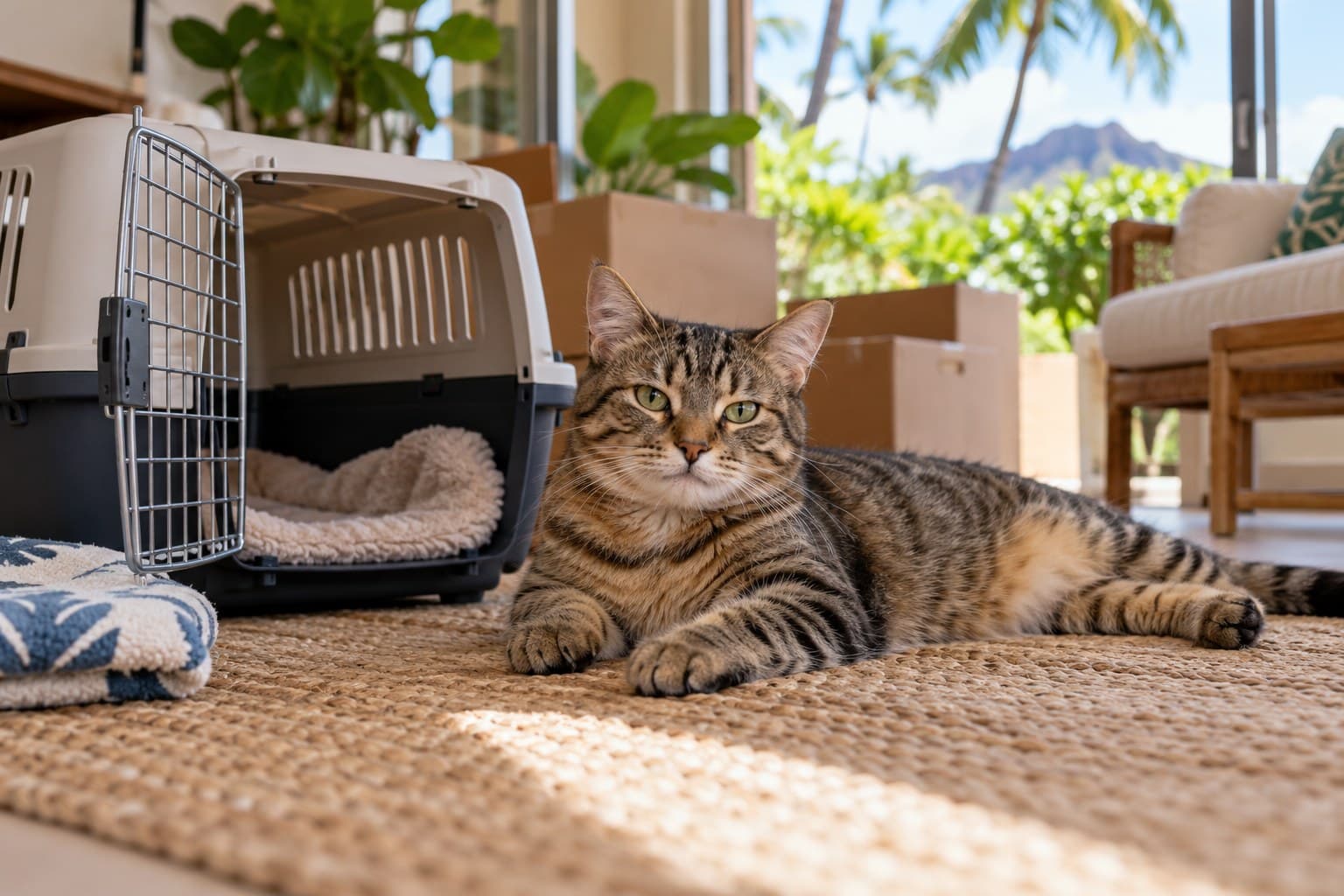
Introduce the carrier at home while life is still familiar. Leave it accessible, use comfortable bedding appropriate to the travel rules, and practice short periods of calm confinement. Build up gradually instead of making the airport the first time your pet spends significant time inside.
Ask the veterinarian about feeding, drinking, medications, and any travel-related concerns. Make a written plan specific to your animal. If you anticipate needing medication, discuss it early enough to follow professional advice rather than improvising on departure morning.
Budget for the complete move
List veterinary appointments, testing, documents, state processing, airline charges, carriers, and ground transport as separate items. Add temporary accommodation or boarding if your home will not be ready. Check current official fees directly; an old blog’s total may not reflect your route or circumstances.
Secure a home that accepts your pet
Confirm pet permission before committing to housing. Ask about animal limits, size or breed restrictions, deposits, and shared-space rules. Do not rely on an informal “probably fine” when your pet will be arriving after a long journey.
Plan the first evening too. Arrange a suitable vehicle, drinking water, familiar food, and a quiet place to settle. For a cat, prepare a secure room with a litter tray. For a dog, identify a safe toilet area and keep initial outings simple.
Make a final check before travel
Review the current state checklist, the airline reservation, and your veterinary calendar together. The Honolulu checklist includes requirements concerning a health certificate, tick treatment, and advance submission of documents. Follow its exact timing and original-document instructions rather than relying on a general travel checklist.
Save contact details for your airline, veterinarian, and the relevant animal-entry office. Keep required travel documents accessible rather than buried in checked luggage. Make sure anyone accompanying or collecting the pet knows the agreed plan.
A well-planned Hawaii move starts with eligibility and ends with a calm arrival. Book around the animal’s confirmed requirements, keep accurate records, and make the journey part of your moving plan from the beginning.
Sources and further reading
- Hawaii Animal Quarantine requirements
- Hawaii Animal Quarantine requirements — official checklist
- USDA APHIS: Preparing Pets for Air Travel
Image: AI-generated editorial illustration for AnimalsSale; not a photograph of an actual animal offered for sale.