You have covered half a street and your dog is investigating the same patch of grass again. To you, the walk seems to have stalled. To your dog, something interesting may just have begun. Before you plan a longer route or buy another toy, try changing one part of an ordinary outing: leave room for the nose.
A walk has more than one purpose
Dogs gather information through scent. The American Kennel Club explains why sniffing is such an important way for dogs to explore. A tree, grass verge or familiar path can offer something worth investigating even when it looks unchanged to you.
Dogs Trust recommends giving dogs time and opportunities to sniff on walks as part of enrichment. This does not mean every outing must be slow or that sniffing replaces all exercise. It means distance is only one way to think about the time you spend outdoors together.
Try a small change on a familiar route
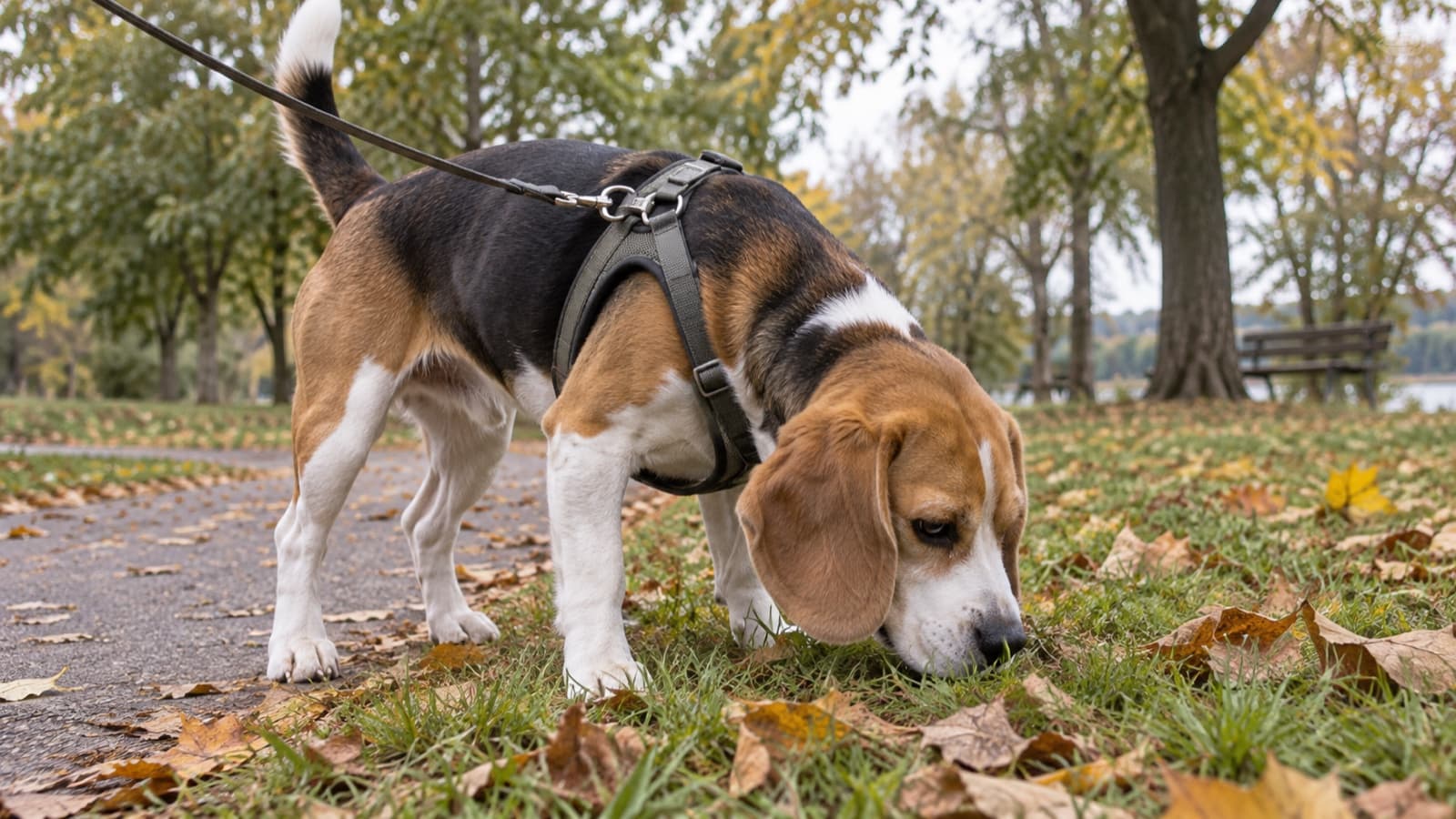
Choose a quiet stretch where you can stop without blocking people or standing near traffic. Use your usual safe walking equipment, including a well-fitted harness where appropriate, and keep control of the leash. When your dog becomes interested in a safe spot, pause instead of immediately asking them to move on.
Let the dog investigate, then invite them onward with a familiar cue when you need to continue. The AKC's walking-games guidance includes unhurried sniffing opportunities alongside simple training. You can have both: a clear cue for crossing a road and relaxed exploration in a suitable place.
For your first experiment, keep the route familiar and leave the headphones in your pocket. Notice where your dog chooses to stop, what draws their attention and whether they are comfortable moving on. You are observing an individual animal, not trying to complete a sniffing quota.
Choice still needs safe boundaries
The RSPCA's walking guidance emphasizes responsible control and choosing exercise to suit the dog. Allowing exploration does not mean following your dog into a road, approaching every unfamiliar animal or letting the leash cross a cycle path. Give other people and dogs space, and respect local leash rules.
Check the ground before allowing a close investigation. Fallen leaves can hide litter, sharp objects or discarded food. Sniffing something and eating it are different activities; steer away from unknown substances and unsafe plants. Use a shorter leash where the surroundings require it, without jerking your dog away from an otherwise safe smell.
Do not turn relaxation into another assignment
Some dogs investigate every few steps. Others prefer walking steadily, watching the surroundings or exploring a different spot. If your dog seems frightened or overwhelmed, move to a quieter location rather than insisting they stop and sniff. The route that looks peaceful to you may still be busy for them.
A slower outing is not a cure for pain, fear or persistent behavior problems. If your dog suddenly refuses walks, limps or appears uncomfortable, seek veterinary advice instead of assuming they simply want more sniffing time. Adjust the amount and type of activity to their age, fitness and health.
A simple autumn experiment
On your next suitable walk, choose one safe place to pause and let your dog set the pace for a little while. On another day, take the same route and notice what changes. Keep the comparison informal: no stopwatch, distance target or promise of a tired dog afterward.
You may cover less ground and discover more about what interests your companion. That familiar corner is part of your dog's world. Occasionally giving them time to explore it can make an ordinary walk feel more like time spent together.
Image: AI-generated editorial illustration for AnimalsSale; not a photograph of an actual animal offered for sale.