An Arizona summer can turn an ordinary dog walk into a scheduling problem. The solution is a routine that gives your dog chances to sniff, learn, move, and rest while keeping heat exposure manageable. A living room, a short safe outing, and a few thoughtful activities can offer more variety than a long walk taken at the wrong time.
Plan for your part of Arizona
A household in the Phoenix area and one at a higher elevation may face different conditions on the same day. Check the local forecast, the route, the available shade, and the ground surface before deciding on an outing. A familiar departure time does not guarantee that the conditions will be suitable every morning.
The Arizona Humane Society recommends keeping pets indoors during hot weather, avoiding strenuous exercise, and using cooler periods for walks. Treat an evening outing as a decision to make after checking conditions; darkness does not automatically mean the pavement has cooled. Keep toilet trips brief when necessary and return to a comfortably cooled indoor space.
Separate bathroom needs from exercise goals
It helps to stop treating every trip outside as a fitness session. One outing may simply be a short toilet break on an appropriate surface. A different, cooler period may allow a relaxed walk with time to investigate smells. On some days, the main activity may happen indoors. None of these needs to become a test of endurance.
Use your dog's behavior as information, but do not wait for distress before changing the plan. Cornell notes that short-muzzled dogs, older dogs, overweight dogs, and dogs with certain health conditions face additional heat risk. Ask your veterinarian how health and medication affect your individual dog's summer routine.
Give breakfast a small job
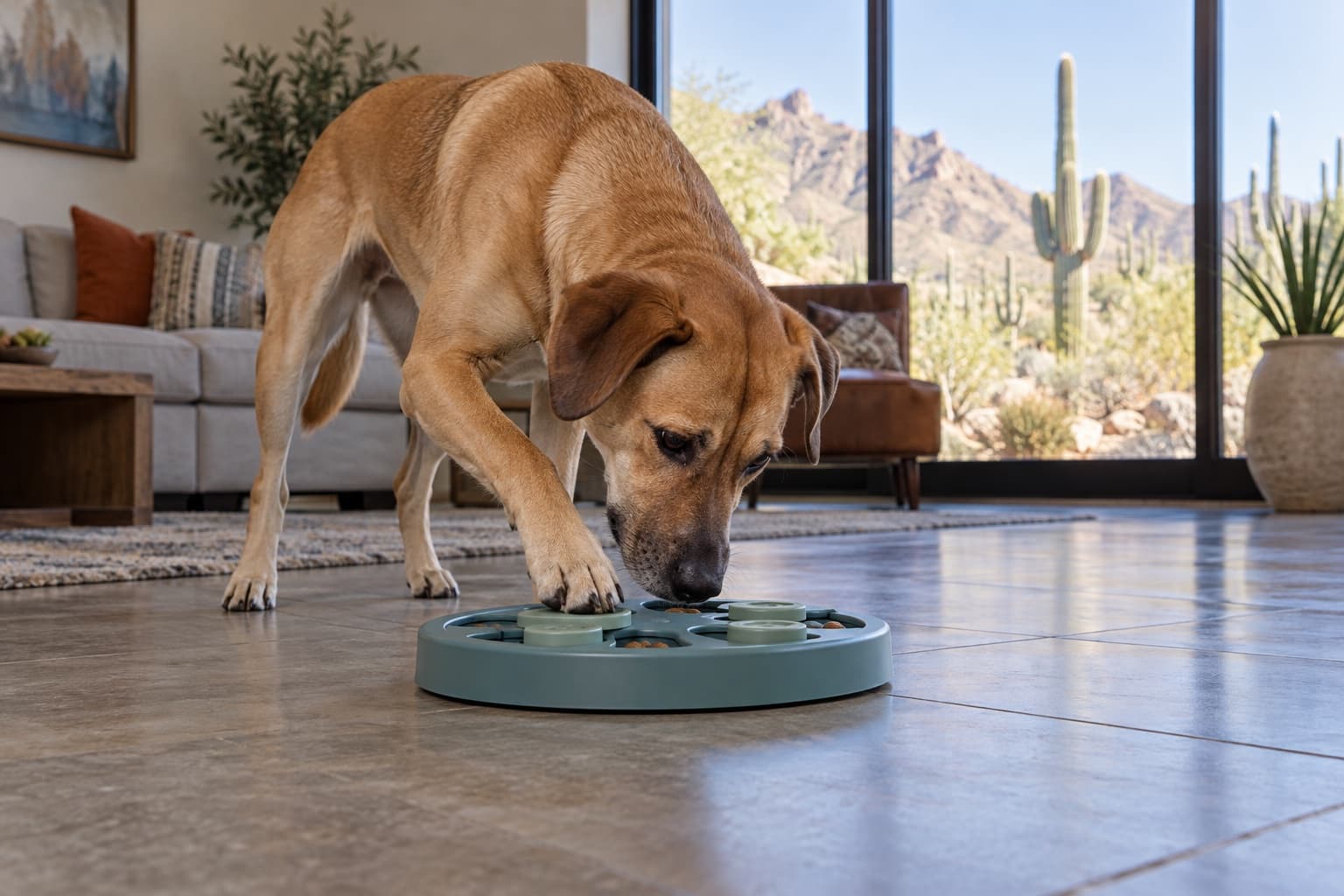
Reserve part of the normal food allowance for a supervised activity. Offer an easy food puzzle or place a few pieces where the dog can find them without jumping or climbing. Show a newcomer how the game works before making it harder. The goal is comfortable exploration, not a puzzle so difficult that the dog gives up.
For a simple example, place a little food in an open, clean cardboard box on the floor and invite the dog to investigate. Remove the box if the dog starts eating the material. Avoid staples, tape, loose packing, and objects small enough to swallow. Use an ordinary bowl for any food the dog does not obtain through the game.
Build a cool indoor activity circuit
Choose two or three stations rather than filling the whole home with equipment. You might practice touching a hand target in one spot, searching for a toy in another, and resting on a mat afterward. Keep floors secure underfoot and clear away furniture corners and obstacles. Adapt each station for a puppy, an older dog, or a dog with restricted mobility.
Short sessions are easy to fit between other tasks. Stop while the dog remains interested and let it choose to disengage. Training should not become an all-day requirement to earn rest. AAHA's indoor enrichment guidance offers ideas for puzzles, games, and learning; use those ideas to find activities your particular dog enjoys.
Keep outdoor plans flexible
Before leaving home, decide how you will shorten the outing and how you will get back into cooling. Carry drinking water and a suitable bowl, and avoid a route that leaves you committed to a long return. A shady destination can still involve an exposed parking lot or a hot walk from the car.
Never leave a dog waiting in a parked vehicle while you run an errand. If a trip cannot be completed with the dog safely accompanied, leave it at home in appropriate conditions. For hikes or parks, check the managing agency's current pet restrictions and heat closures before departure rather than assuming last season's access still applies.
Know when the plan has become an emergency
Heavy panting, drooling, reluctance to continue, or seeking shade can signal overheating. Weakness, confusion, vomiting, breathing difficulty, seizures, or collapse require urgent veterinary attention. Stop activity, move into cooling, and call a veterinary hospital. Begin wetting the body with cool water and use airflow while arranging care; keep water away from the nose and mouth and do not force drinking.
Do not postpone veterinary advice because the dog appears to improve. Cornell and the Royal Veterinary College both emphasize prompt action for suspected heat illness. Save your regular clinic and an emergency hospital in your phone before you need them, and check where the nearest suitable facility is when traveling.
Make summer success easy to recognize
Try a small weekly plan: one new search location, one easy training goal, and a rotation of familiar toys. Note which activities lead to relaxed interest and which cause frustration. Share the plan with everyone who walks or watches the dog so expectations remain consistent.
A successful summer day does not need a distance record. It can be a comfortable toilet outing, a satisfying sniff in safe conditions, a few minutes of shared learning, and an undisturbed nap. Build the routine around the dog in front of you and give yourself permission to change the outdoor plan when Arizona's weather demands it.
Image: AI-generated editorial illustration for AnimalsSale; not a photograph of an actual animal offered for sale.