When an Alaska evening arrives before the family has finished its day, a dog still needs attention, movement, and something interesting to do. A workable winter routine combines outdoor time suited to conditions with indoor activities that are easy to repeat. It should also leave room for sleep and for the days when work, weather, or travel disrupt the plan.
Build around your location and your dog
Winter daylight and weather vary across Alaska, so start with local conditions rather than a single statewide schedule. Look at the routes you can reach safely, the footing near home, and the time you can reliably spend outside. A weekend adventure is welcome, but the ordinary workday needs a plan of its own.
A northern breed is not automatically comfortable in every condition. AAHA notes that even thick-coated pets can be vulnerable to cold injury. Size, coat, age, health, wetness, and the length of exposure all matter. Ask your veterinarian about your dog's circumstances, particularly if it is young, elderly, short-coated, or managing a health condition.
Make one walk an observation outing
When conditions permit, choose a manageable route and allow time for investigating smells instead of focusing entirely on pace. Carry a light, use visible gear, and keep the dog under control. Decide on a shorter option before leaving so you can turn back without treating the outing as a failed goal.
Avoid unfamiliar ice and keep the dog away from frozen water. Stop an outing if the dog begins lifting paws, shivering, slowing unexpectedly, or showing distress. Return to warmth and seek veterinary advice for concerning signs. Indoor activity can take over for the day; it does not need to compensate with frantic exercise.
Turn part of dinner into a search
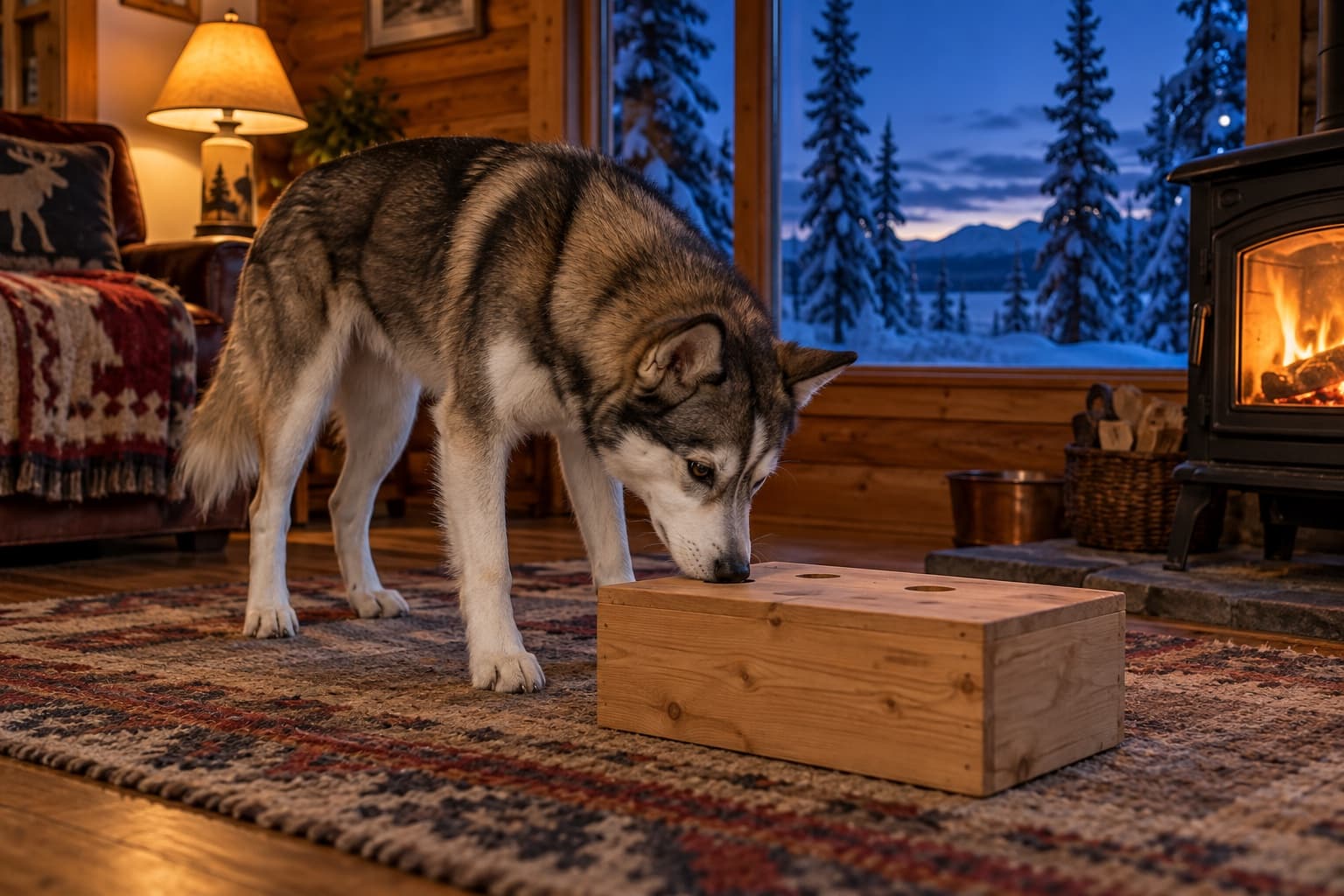
A basic food search needs only a safe room and a little of the dog's normal food. Let the dog watch you place a piece on a clear patch of floor, then invite it to find it. Gradually move to a few easy locations. Keep food out of furniture gaps, electrical areas, and places where the dog would need to climb.
The American Kennel Club describes scent games as a way to engage dogs indoors, including in small spaces. Clean open boxes can add variety for a dog that will investigate without chewing or swallowing the material. Supervise, remove packaging hazards, and stop if searching becomes frustrating. Avoid using concentrated scent oils for an improvised game.
Teach something useful for winter handling
Choose a skill that will help tomorrow: standing on a mat while a harness goes on, touching a hand target, or returning to a bed when asked. Break it into small steps and reward willing participation. Use a non-slip surface and avoid repeated jumping or tight turns on smooth floors.
If the dog needs booties, introduce them gradually indoors before expecting a complete walk. First let the dog investigate them, then practice brief comfortable wear and a few steps. Check fit and movement. A rushed first attempt at the door on a difficult morning gives both of you less room to learn.
Use the house without creating a racecourse
A hallway can host a calm recall game between two adults if there is enough space and secure footing. A larger room can offer a simple sequence of hand targeting, finding a toy, and settling on a mat. Keep doors closed to stairs and remove obstacles that could cause a collision. Adapt the task to the individual dog's mobility.
Offer several short opportunities instead of expecting one long session to solve the whole day. AAHA's indoor enrichment guidance includes games, puzzles, and training as options. Watch whether the dog appears interested and comfortable. If an activity produces frantic repetition or conflict over a toy, choose an easier alternative and seek help if needed.
Make quiet time part of the schedule
An evening routine might include a suitable outdoor break, dinner, a brief search, and then a quiet period while the household settles. This is an example to adjust, not a prescription. A dog that needs more or less activity should have a plan based on its health and behavior rather than on a breed stereotype.
Keep a resting area away from busy doors and household traffic. If you use food toys or chews, choose suitable sizes and supervise as needed. Separate animals when they might compete over food. Count food used in activities within the daily allowance; an indoor winter routine does not by itself mean a dog needs working-sled-dog portions.
Prepare the practical details before a storm
Keep leashes, lights, towels, and any fitted outdoor gear in one place. After walks, check paws and remove ice, salt, and debris. Store antifreeze and other household chemicals securely. Plan a safe toilet route near home so an ordinary need does not become a difficult expedition during bad conditions.
Save veterinary and emergency contacts, keep medication supplies in your household plan, and decide who could help if travel is interrupted. Familiar games are especially useful on disrupted days because the dog already understands them. A sustainable Alaska winter routine offers companionship and choice as well as exercise, giving you several ways to make the day worthwhile when the outdoor plan changes.
Image: AI-generated editorial illustration for AnimalsSale; not a photograph of an actual animal offered for sale.