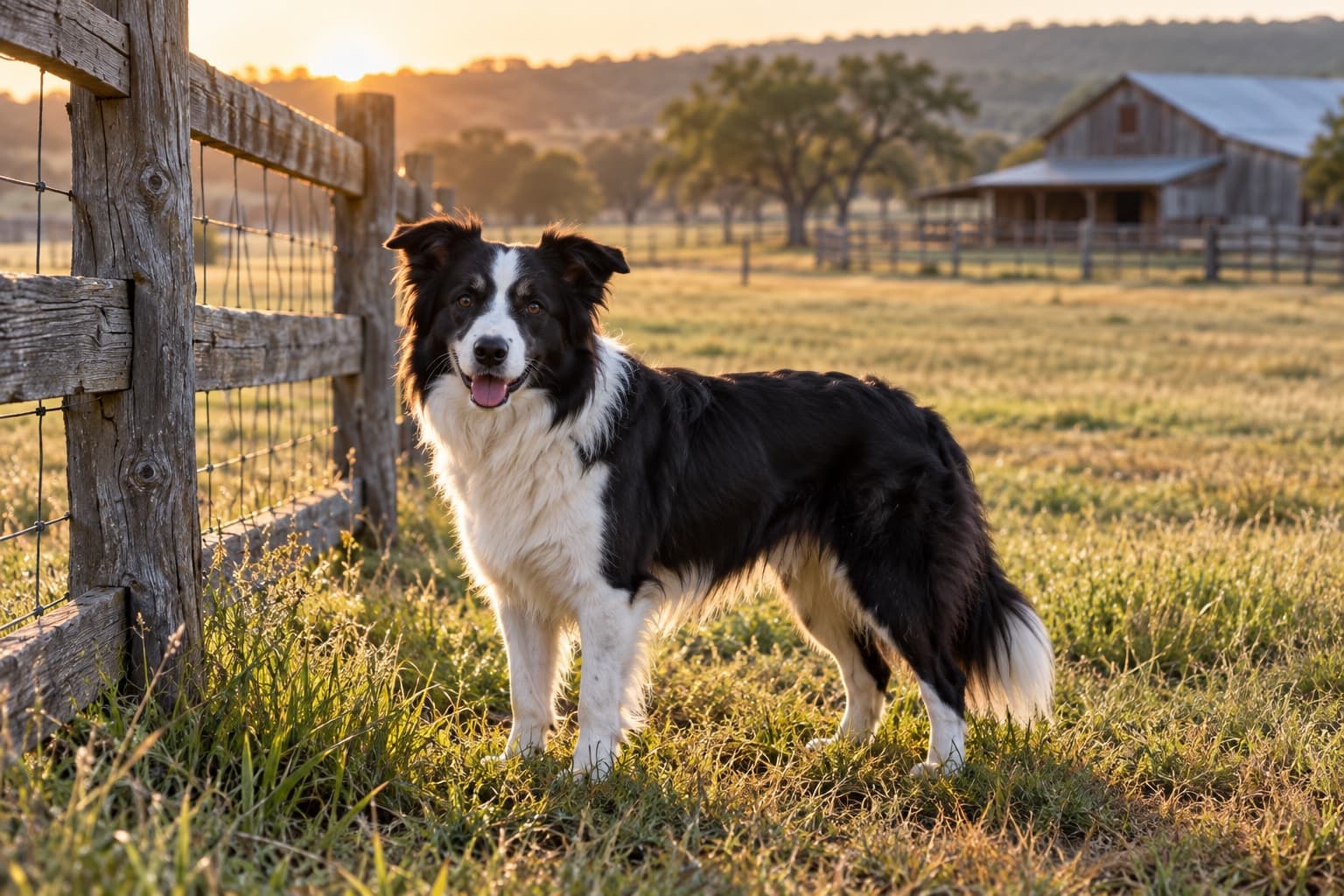
A dog watching the gate while the family finishes morning chores is an appealing picture of Texas country life. Living with that dog means planning the quieter hours too: afternoons when nobody is moving livestock, wet weekends indoors, and evenings when the children want to run around the yard. A herding dog can be a rewarding companion, but acreage alone does not provide the attention, training, and supervision it needs.
Start with the job you actually have
Write down what you want your dog to do. Moving cattle under experienced direction is a different assignment from accompanying you to the mailbox or joining weekend walks. A family with a few backyard chickens may need a calm companion that ignores the birds rather than a dog eager to control movement. Being interested in stock is not the same as knowing how to work it safely.
Distinguish herding from livestock guarding as well. A dog selected to move animals and a dog selected to live with and protect a flock have different roles. Neither becomes reliable simply by being placed in a pasture. If you need a working partner, consult a stock-dog trainer who can evaluate your animals, facilities, experience, and the individual dog before recommending a match.
Look beyond the breed photograph
The American Kennel Club describes Border Collies as energetic dogs whose need for occupation can overwhelm an unprepared household. Australian Cattle Dogs are also intelligent working dogs. Those descriptions are a starting point, not a temperament assessment of a particular puppy. Ask about the parents, the breeder's goals, and what adult dogs from earlier litters are like in ordinary homes.
A useful conversation includes questions about recovery after excitement, reactions to unfamiliar people, and the ability to rest near household activity. Ask what happens when a planned activity is canceled. If the seller answers every concern with “just let the dog run,” keep looking. An adult dog with a documented foster-home history may offer more information about everyday compatibility than a very young puppy.
Make a weekday plan before choosing a puppy
Imagine a normal Tuesday rather than an ideal Saturday. Who takes the dog out before work? Who supervises it when a delivery arrives? Where does it rest during meetings, school pickup, or a trip to town? Put those answers on paper and agree on them as a household. A dog should not have to invent entertainment while people assume someone else is responsible.
One possible routine combines an early sniffing walk, a brief reward-based training session, a quiet rest period, and another shared activity later. Adjust activity to age, health, weather, and the dog's responses. There is no single exercise quota that makes every herding dog content, and repeatedly increasing high-speed fetch can become an impractical daily expectation.
Teach skills that make ranch life easier
Practice coming when called, waiting at a gate, walking on a loose leash, and going to a comfortable resting spot. Start in a quiet enclosed area before adding distractions. Use rewards and manageable steps. A gate cue practiced in the kitchen is easier to teach than one first attempted beside moving equipment.
Plan physical barriers as well as training. Keep a newcomer separated from livestock, machinery, open roads, and visiting animals. Do not test instinct by letting a puppy chase sheep or cattle. An experienced instructor can determine whether supervised stock work is appropriate. Games and household training can remain the main shared activities for a companion dog.
Children and visitors need their own plan
Children running, bicycles rolling past, and guests entering a gate create situations worth discussing before the dog arrives. Arrange supervised introductions and give the dog a retreat where nobody follows it. Teach children to leave a resting or eating dog alone. Use gates or separate rooms when adults cannot actively supervise; asking a child to manage an excited dog is not a substitute.
If chasing, ankle-directed behavior, or intense fixation develops, prevent rehearsal and seek qualified help early. Avoid trying to solve it with shouting or rough handling. Record what happens immediately before the behavior so a trainer can help you change the situation and teach a useful alternative.
Plan for Texas afternoons and days off
Ranch work does not make a dog immune to heat. Cornell's canine health guidance recommends cooler activity periods, access to shade and water, and indoor cooling when conditions are extreme. Choose chores and walks around actual conditions rather than expecting a thick-coated or enthusiastic dog to set sensible limits for itself.
Prepare indoor options before the first stretch of difficult weather: a supervised food puzzle, a simple search game, or a few minutes of practicing familiar cues. The right match is a dog whose ordinary needs your household can meet consistently. Before paying a deposit, describe your least convenient weekday to the breeder or rescue and ask whether the dog still sounds suitable.
Image: AI-generated editorial illustration for AnimalsSale; not a photograph of an actual animal offered for sale.