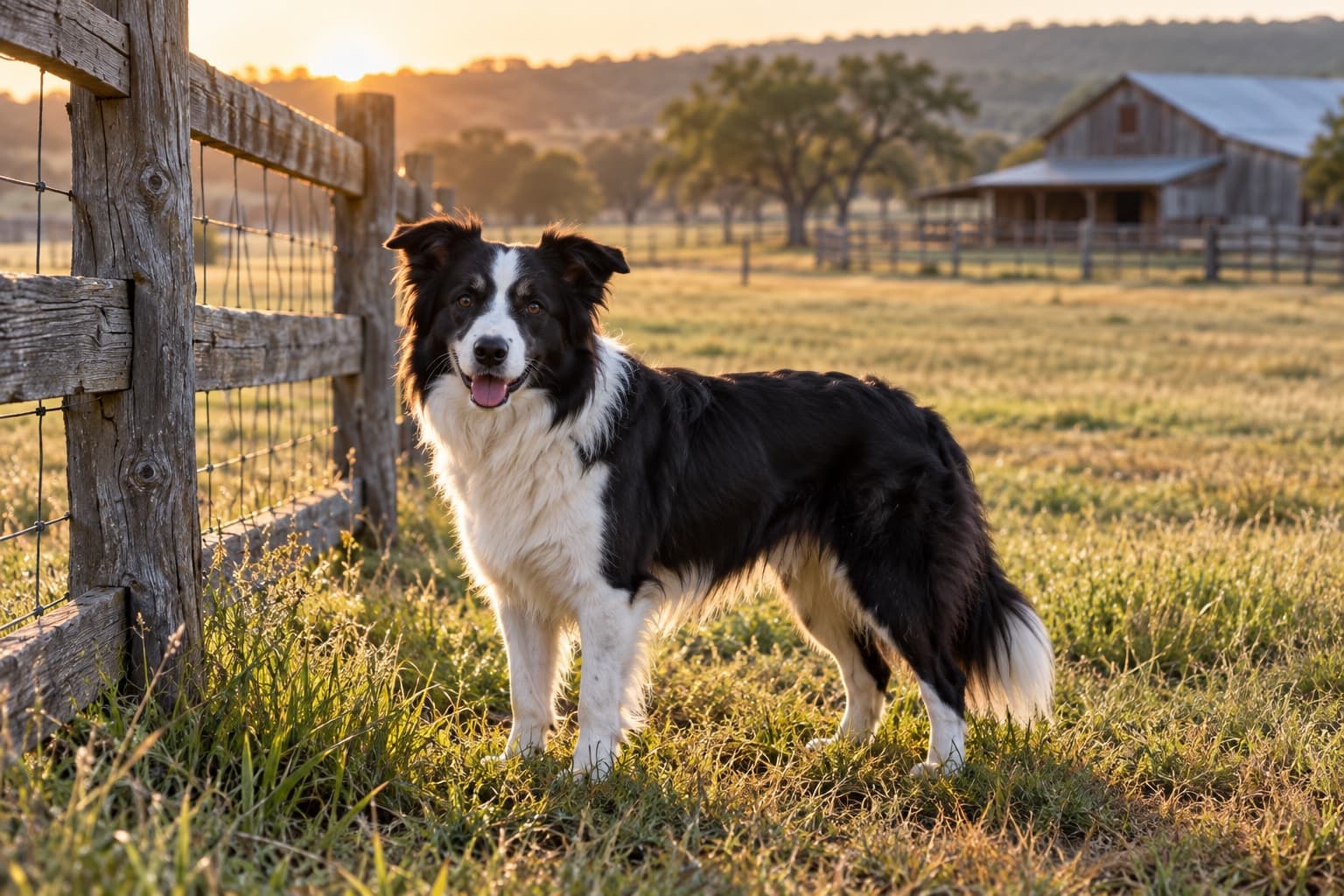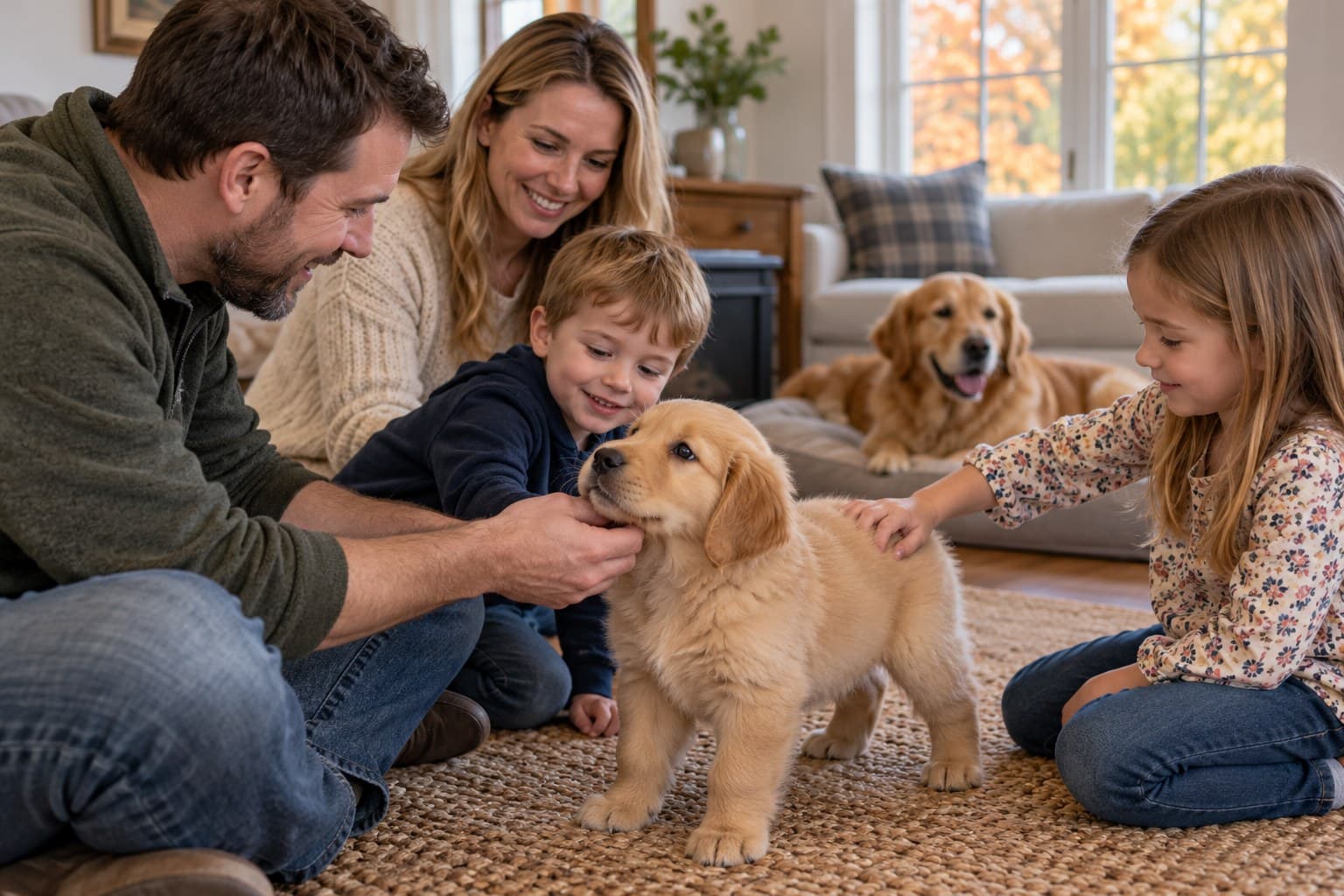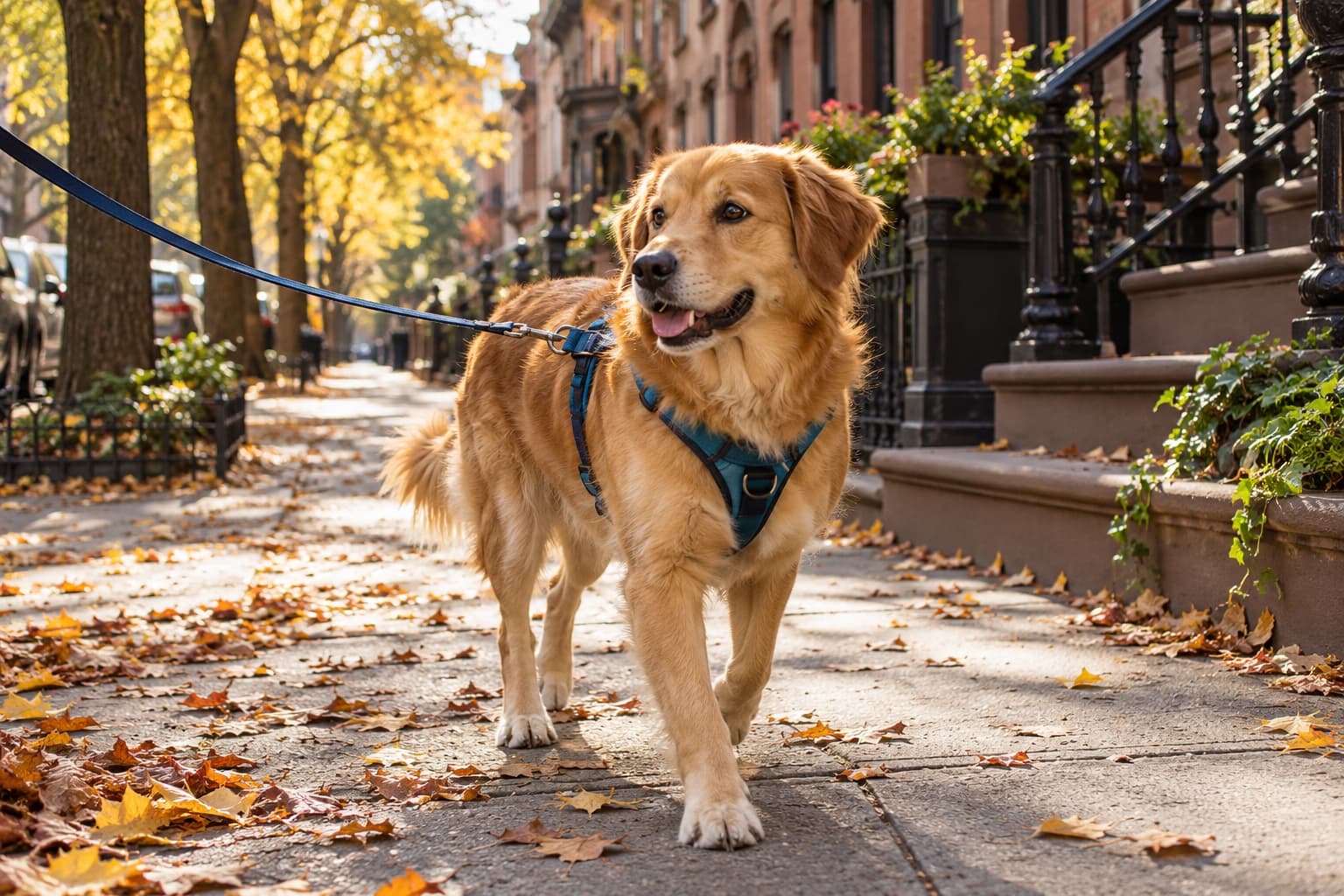
A New York dog might begin the morning in an apartment elevator or beside a quiet country lane. Those settings create different practical questions, but neither a city address nor a large yard guarantees a good life. The useful comparison is what your dog will experience on a normal day: where it can rest, how it reaches a toilet area, and who has time to share activities with it.
Compare the trip from bed to outdoors
In a city apartment, every toilet break may include a hallway, elevator, lobby, and busy sidewalk. Before choosing a puppy, walk that route at the hours you expect to use it. Think about late-night trips, building maintenance, wet weather, and whether you can carry a young or unwell dog if necessary.
An upstate house may offer a faster route outside, but check the details there too. Does the door open directly toward a road? Can snow block the usual path? Is the fence secure at ground level? A convenient yard is useful only if it is safe and someone takes responsibility for supervising and cleaning it.
Choose for temperament and routine
Size alone cannot tell you whether a dog will fit an apartment. Ask how the individual reacts to footsteps outside a door, unfamiliar dogs at close range, and being alone. A smaller dog that is uncomfortable with frequent encounters may need more careful management than a larger dog that remains relaxed around them.
For a quieter property, ask about wildlife interest, roaming, and responses to passing vehicles. A dog advertised as energetic still needs a plan for rainy workdays. Tell the breeder or rescue exactly how long the dog would be alone and which activities you can provide every week. An honest description gives them a better chance of recommending a suitable companion.
City skills begin before the crowded sidewalk
Practice waiting while a door opens, turning to follow you, settling on a mat, and moving past distractions at a comfortable distance. Begin somewhere quiet. Leave room to step aside rather than asking a new dog to cope with every greeting. A walk can be successful without visiting a dog run or meeting every person who asks.
NYC Parks states that dogs generally need a leash no longer than six feet, with exceptions for designated runs and specified off-leash areas and times. Its guidance also calls for current license and rabies documentation in public. Check the official page and signs for the particular location; one park's permitted hours should not be applied to another.
Upstate freedom still needs boundaries
A broad view from the porch does not show every hazard. Walk the property and decide where the dog will spend time, where a lead is necessary, and which areas remain inaccessible. Keep a newcomer away from equipment, unfamiliar animals, and unfenced roads while you learn about its behavior. Practice recall in a securely enclosed space before expecting reliability around distractions.
For trips beyond home, check the actual land manager. A municipal trail, a New York state park, and a different public recreation area can have different pet policies. New York State Parks publishes location-specific access information and leash guidance. Read the destination's current rules, including seasonal restrictions, before packing the car.
Put the costs beside the calendar
Make a comparison sheet using your own circumstances rather than statewide averages. For a city home, obtain actual prices for walking help, boarding, grooming, and transport to your chosen clinic. Ask the building about pet policies before paying a deposit for an animal. Include the time needed to reach outdoor space, not just the walk itself.
For an upstate home, map regular and emergency veterinary care, arrange a backup caregiver, and account for travel time. If you commute, decide who handles delays. A yard does not cover for a person who cannot get home, and living farther from a clinic makes advance planning more useful.
Make seasonal routines portable
Both settings benefit from having an indoor alternative ready before a weather disruption. Teach an easy search game, keep a supervised puzzle available, and arrange a comfortable resting place away from household traffic. Practicing familiar activities in different rooms can also help when you visit family or stay somewhere temporarily.
When winter brings ice or treated sidewalks, choose footing carefully and check paws afterward. AAHA recommends removing salt and debris after walks and considering suitable protective clothing or booties where appropriate. Adjust outings to your dog's comfort and health. Avoid assuming that every upstate dog handles cold well or every city walk is sheltered.
Try the life before making the commitment
Spend one week following the proposed timetable without the dog. Take the early walk, check the building route, locate the emergency clinic, and ask the person who would cover a work delay. If a task is already difficult, solve it before a puppy is depending on you.
City and upstate homes can both support companionship, exploration, and rest. Choose a dog whose individual needs fit the life you can provide now. If you expect to move between the two, prioritize a flexible routine and gradual introductions to new settings rather than assuming that more space will solve every challenge.
Image: AI-generated editorial illustration for AnimalsSale; not a photograph of an actual animal offered for sale.