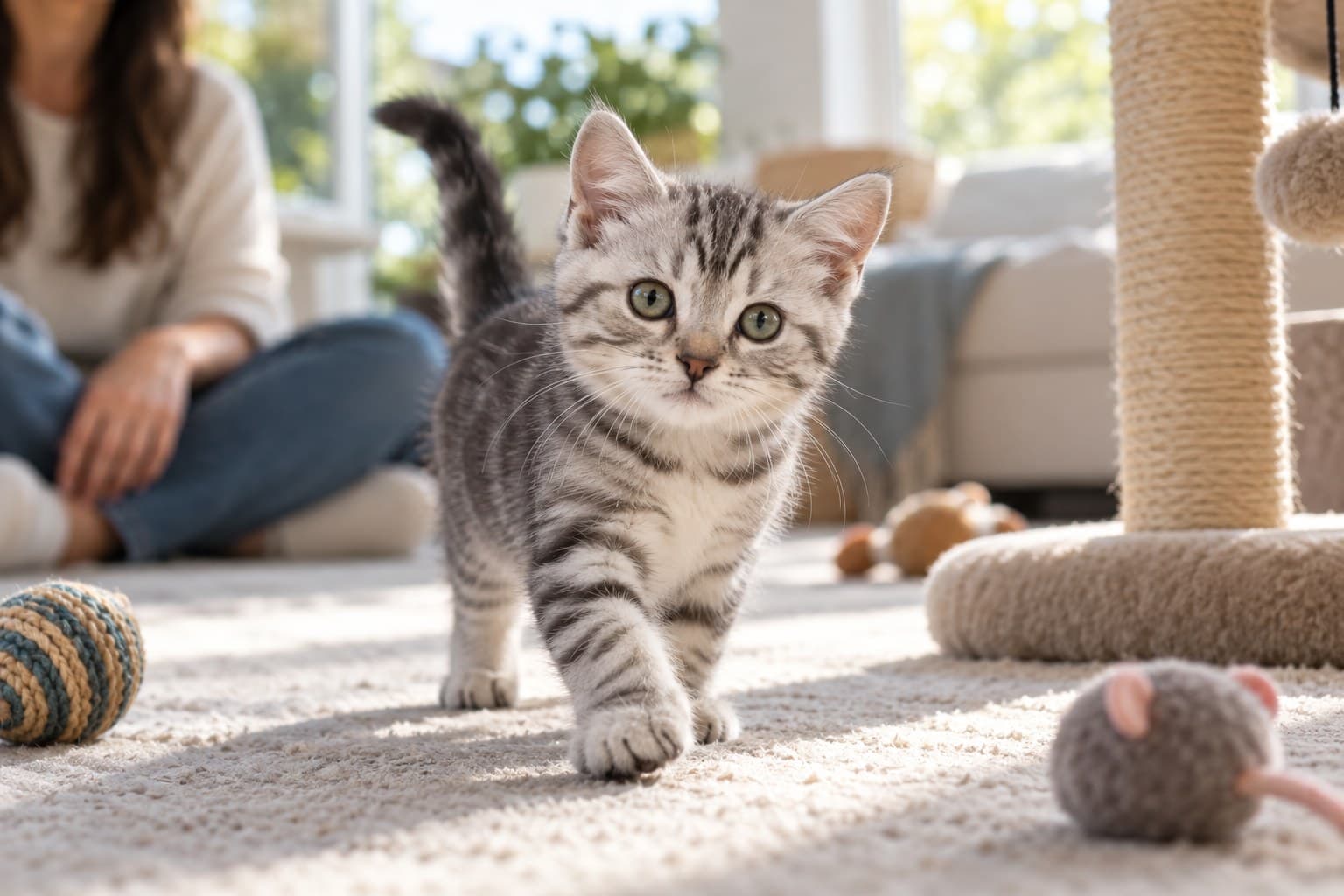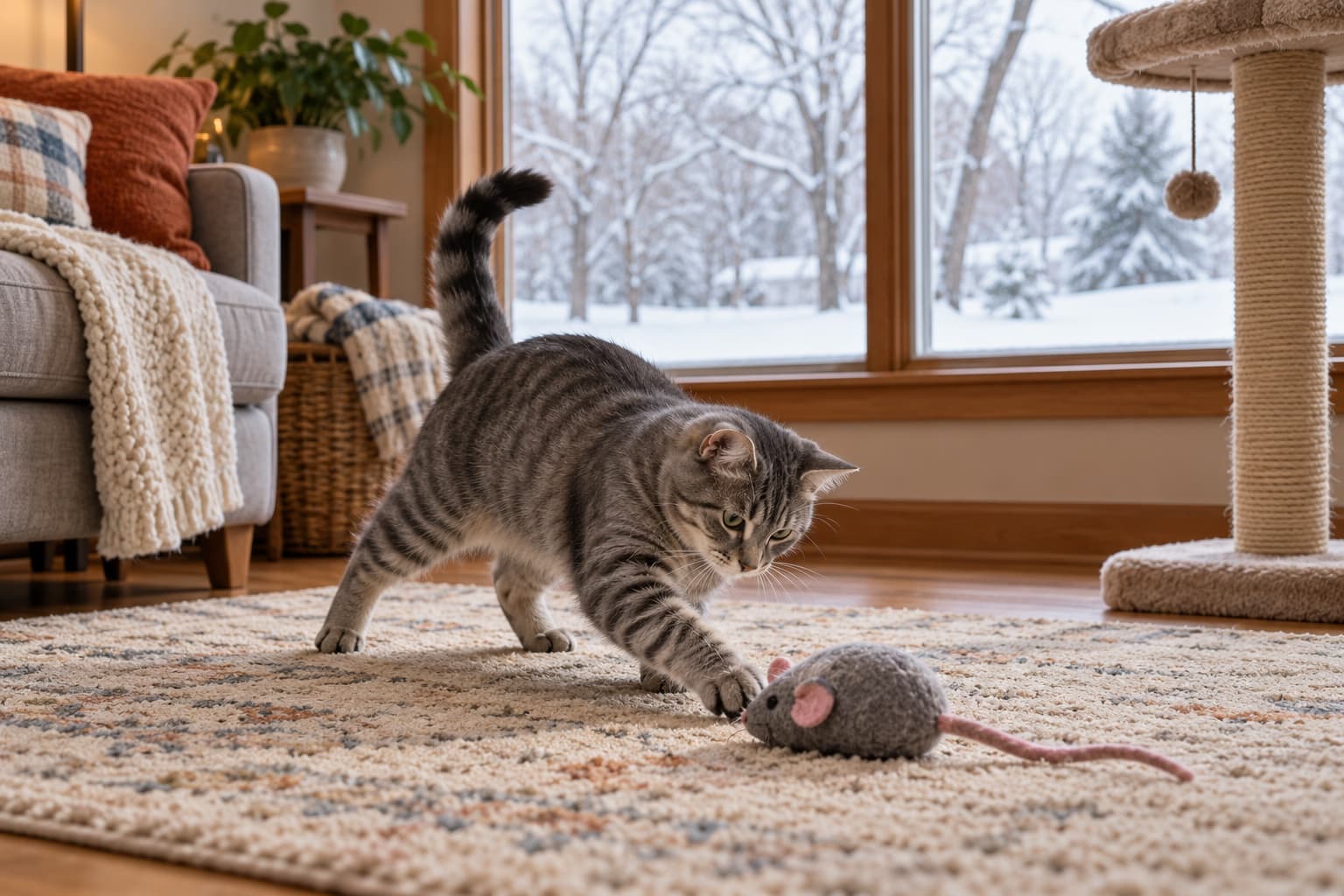
A snowy Minnesota afternoon can be peaceful for people and repetitive for an indoor cat. The windows offer a changing view, but the floor plan, toys, and feeding spot may remain exactly the same. Winter is a useful time to look at your home from the cat's height and add a few opportunities to explore, stalk, scratch, and choose a comfortable place to rest.
Start by observing a normal day
Before buying anything, spend a few days noting where your cat goes and when it seeks attention. Does it watch the hallway from the sofa, hide when visitors arrive, or bring a toy out after dinner? A routine built around those preferences is more likely to be used than an impressive activity station in a room the cat avoids.
Do not assume that reduced movement is simply winter boredom. New reluctance to jump, a change in appetite, unusual hiding, or changes in litter-box use deserve veterinary advice. VCA's enrichment guidance stresses that cats have individual preferences; a suitable activity should also fit the cat's physical ability and confidence.
Create a small hunting session
Try a supervised wand-toy session in a clear area with secure footing. Move the toy along the floor, pause it behind a safe obstacle, and let the cat choose whether to approach. Leave opportunities to catch the toy rather than keeping it permanently out of reach. Put string, ribbons, and wand toys away when the session ends.
The American Animal Hospital Association recommends play that allows cats to express stalking and chasing behavior. You do not need to make every session energetic. For a hesitant cat, watching and taking a few steps may be a reasonable beginning. Avoid pulling the cat from a hiding place or forcing interaction when it walks away.
Make the room interesting at several heights
Offer a stable elevated resting place and a route the cat can use comfortably. That might mean an anchored cat tree or a lower platform beside an existing perch. Keep landing areas clear. A senior cat may benefit from intermediate steps rather than being expected to make one large leap.
In a Minnesota home, a window station needs a little thought. Choose an interior perch away from a cold draft and keep the window securely closed. Move cords out of reach and make sure nearby furniture cannot tip. If an outdoor view leaves the cat agitated instead of engaged, offer another station or partially screen that view.
Use meals without making food hard to obtain
Reserve some of the normal daily food for a simple, supervised puzzle or place small portions in easy-to-reach locations. Start with the food plainly visible. If the cat is confused, show it where the food is or return the portion to its usual dish. A puzzle is an optional way to add interest, not a reason for a cat to miss meals.
Cornell recommends an appropriate complete and balanced diet and ongoing access to fresh water. Keep activity treats within the feeding plan rather than adding an unlimited supply. Ask your veterinarian about portions if your cat is gaining weight or has a medical diet. Winter indoors does not automatically justify extra calories.
Rotate a few choices instead of adding clutter
Keep a small selection of safe toys available and exchange one or two periodically. A soft toy, an open cardboard box, and a stable scratching surface can create several different activities. Inspect items for loose pieces, handles, staples, and anything the cat could swallow or become caught in. Remove damaged toys promptly.
Offer both vertical and horizontal scratching options if space allows, and notice which the cat chooses. Put a scratcher near an established resting or activity area rather than hiding it behind furniture. Keep walkways clear for people and pets. A home with more usable space can be more inviting than one crowded with unused accessories.
Give each cat access to the activity
In a multi-cat household, watch who approaches first and who hangs back. Try individual play sessions and separate puzzle locations so one confident cat does not control every opportunity. Preserve quiet routes to food, water, litter boxes, and resting areas. A new climbing station should not create a narrow passage where another animal can block access.
Rest remains part of a good day. Set aside an undisturbed spot where children, visitors, and other pets do not pursue the cat. Let household members know when an activity is supervised and which toys must be put away afterward. Consistency makes a simple setup easier to maintain.
Build a routine you can repeat until spring
For example, pair a brief morning search with a calm evening play session, then change one part of the setup at the weekend. Track interest rather than counting dramatic jumps. If the cat repeatedly ignores an activity, adjust the location, timing, or difficulty before buying a replacement.
Prepare for winter disruptions too: keep the carrier accessible, save veterinary contact details, and include pet supplies in your household storm plan. The goal is a home where your cat can make everyday choices safely. A few well-used opportunities for movement and exploration can make the indoor season more varied without turning your living room into an obstacle course.
Image: AI-generated editorial illustration for AnimalsSale; not a photograph of an actual animal offered for sale.