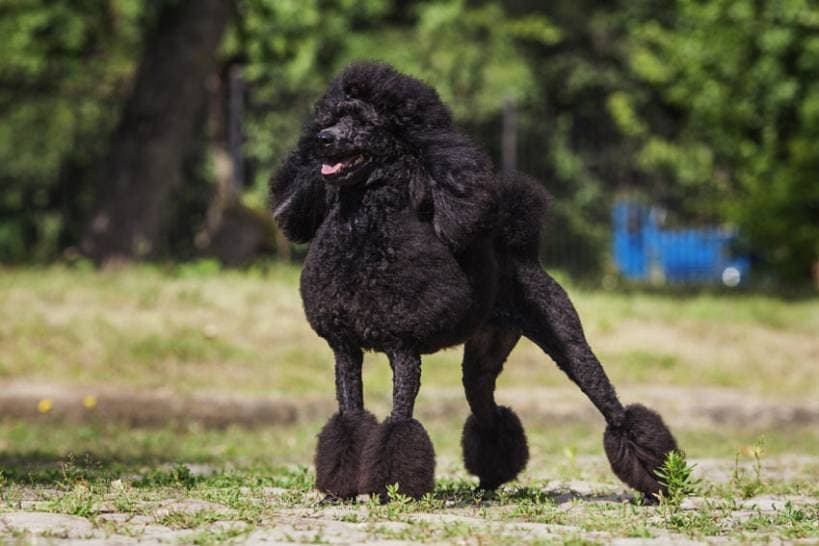
The Poodle is recognizable for its curly coat, but there is much more to the breed than a show haircut. Its background includes retrieving work, and many individuals enjoy learning, exploring and spending time with their families. Popularity rankings vary by country and year; they are not a useful reason to choose a dog.
Understanding the sizes
Size terminology depends on the registry. The American Kennel Club recognizes Standard, Miniature and Toy Poodles. The FCI breed standard also recognizes a Medium size, giving four size varieties in that system. Check the relevant standard and the parents' documented size instead of relying on informal advertising terms that may mean different things to different sellers.
All sizes need exercise, teaching and social contact. A smaller Poodle is not a decorative object or automatically easier to train. A larger one requires equipment, transport and handling arrangements suited to its body. Choose according to the individual dog and your daily routine, rather than assuming that size alone determines energy or temperament.
A coat that needs a plan
Poodle coats can mat if grooming is postponed. Arrange regular professional care or learn appropriate techniques from someone experienced, and ask how to comb thoroughly between appointments. Pay attention to friction points beneath a harness, behind the ears and around the legs. A tidy surface can hide tangles closer to the skin.
A practical pet trim can be different from the elaborate clips seen in shows. Comfort, cleanliness and the time you can realistically spend on maintenance should guide the choice. Do not pull painful mats or cut close to the skin without appropriate skill. Start with brief, rewarded handling sessions so that grooming does not become a repeated struggle.
Low shedding is not the same as being allergy-free. The American Academy of Allergy, Asthma and Immunology explains that pet allergens are proteins associated with sources including dander and saliva, not simply loose hair. If allergies are a concern, seek medical advice and spend time around the particular dog before committing. No coat label can promise that symptoms will not occur.
Learning without human labels
A responsive dog still needs clear teaching. Reward small steps, keep practice manageable and repeat useful skills in different settings. Coming when called, relaxing on a mat and comfortable lead walking often matter more than impressive tricks. Avoid interpreting a mistake as revenge, moral failure or a deliberate attempt to embarrass the owner.
Dogs may react to our tone and body language without understanding why we are upset about something that happened earlier. If an unwanted behavior recurs, examine the situation: was the dog left too long, unable to reach a toilet area, frightened or given access to something tempting? Change the setup and teach an alternative. Distress during absences needs a gradual support plan, not punishment after returning home.
Activity and household life
Provide enjoyable walks and opportunities to sniff, alongside games suited to the dog's interests. Searching for a toy, practicing simple retrieves or learning a new cue can add variety. Give the dog breaks and let it rest after stimulation. Adapt activity to age, fitness and weather rather than assuming that an intelligent breed must be busy every minute.
Supervise children and teach them to respect food, sleep and personal space. Introduce visitors without forcing greetings. A Poodle is not automatically a guard dog, a perfect child's companion or an effortless pet for an older person. Compatibility depends on the dog's behavior and the support the household can provide.
Choosing responsibly
Ask about health screening appropriate to the size variety, and request identifiable results for the parents. Discuss those records with a veterinarian and ask about health problems in close relatives. A general examination is useful, but it does not replace specific screening. Rescue organizations should likewise explain known medical needs and the limits of available history.
Budget for coat maintenance throughout the dog's life, including periods when you are busy or away. Meet the dog, ask practical questions and consider who will provide care if your circumstances change. A well-chosen Poodle can be a rewarding companion when its grooming, activity and social needs are treated as everyday commitments.