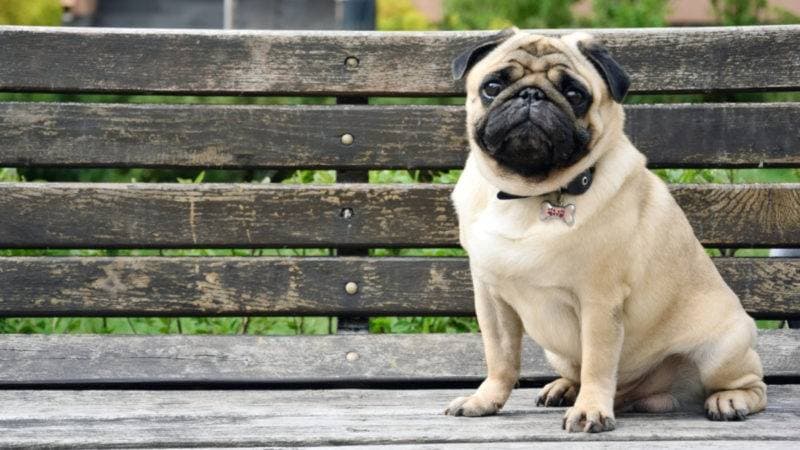
The Pug is best known as a compact companion with a short face, curled tail and expressive eyes. Its history is closely associated with people who valued small household dogs. Separating documented records from popular legends makes that history more interesting and more accurate.
Chinese origins
Breed histories trace the Pug's roots to China, where small companion dogs were valued in elite households. The American Kennel Club's account of Pug history describes this eastern background and the breed's later popularity in Europe.
Ancient descriptions and pictures do not provide a complete pedigree leading to every modern Pug. Stories about imperial privileges, symbolic wrinkles or miniature dogs carried in clothing may reflect wider traditions involving several small breeds. They should not all be treated as verified events in Pug history.
Modern breed identity developed through later selection and formal standards. A resemblance between an old figure and a present-day dog is useful cultural evidence, but it cannot establish that size, facial shape and health were unchanged over centuries.
Pugs in Europe
Pugs became fashionable in European courts and wealthy households as trade and travel brought Asian dogs westward. Their association with the Dutch House of Orange is particularly familiar in popular breed accounts.
One often-repeated story concerns Pompey, a dog said to have warned William of Orange of danger. It is best presented as a traditional story rather than a fully verified account of a modern registered Pug saving a king. Titles, dates and even the dog's identification can become blurred in retellings.
The breed also became known in Britain and France. Court fashions helped spread its image, but popularity was not a simple sequence of one famous owner or performer single-handedly reviving the breed.
Pugs in art and language
William Hogarth included his dog Trump in The Painter and his Pug, dated 1745. Tate's account of the painting provides a concrete example of a Pug's place in British art and personal identity. Paintings can also show how depictions of dogs differ from today's show-ring ideals.
The origin of the English word "Pug" has been explained in different ways, including associations with older terms for small animals. These explanations should be treated as etymological proposals, not as proof that one physical feature gave the breed its name.
Names used for the breed vary across languages. Their histories can reflect theater, fashion and local usage, but a memorable naming story is not the same thing as evidence about the dog's biological ancestry.
History does not excuse health problems
A breed's long popularity does not mean all its physical traits are harmless. The Royal Veterinary College's research on Pug health identifies substantial welfare concerns associated with the modern breed. Snorting, noisy breathing and difficulty exercising should not simply be celebrated as amusing characteristics.
Prospective owners should discuss breathing, eyes, skin folds and weight with a veterinarian. Meet adult dogs and ask how comfortably they move, sleep and cope with ordinary activity. Avoid choosing a puppy for the most exaggerated face or deepest wrinkles.
Living with a companion today
Pugs need appropriate walks, play, rest and company, with care adjusted to their health and weather conditions. Use reward-based training and supervise interactions with children. Being bred for companionship does not guarantee that every individual enjoys every visitor or handling procedure.
The most useful lesson from the breed's history is the enduring responsibility that comes with keeping a dog close to people. Admiring art and tradition should go together with selecting for comfortable breathing, sound movement and a good quality of life.