
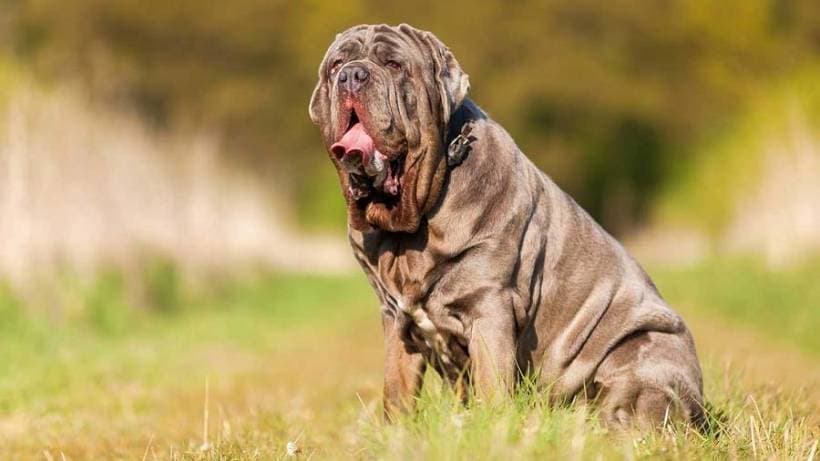
The Neapolitan Mastiff, also called the Mastino Napoletano, developed in southern Italy and takes its name from Naples. Its massive frame, loose skin and pronounced folds give it an unmistakable appearance. Its history also helps explain modern care needs.
From regional dogs to a documented breed
Large mastiff-type dogs have a long history as guards and working animals. Accounts of the Neapolitan Mastiff often connect it with ancient Roman dogs, but a continuous pedigree stretching back thousands of years cannot be established from those stories alone. The development of the modern standardized breed is much better documented.
Piero Scanziani played an important role after seeing dogs at a Naples exhibition in 1946. His interest helped bring wider attention to the regional mastiffs and contributed to the development of a breed standard. The dog Guaglione became an influential early registered example associated with that work.
The breed later spread beyond Italy and gained recognition in other countries. The American Kennel Club recognized the Neapolitan Mastiff in 2004. An old popularity position should not be presented as a current ranking, and recognition does not mean breed standards have remained unchanged forever.
Appearance without exaggeration
The Neapolitan Mastiff is a large, substantial dog with a broad head and loose skin. Males are generally larger than females, but individuals vary. A breed standard describes an overall balanced dog; it is not a challenge to produce the heaviest possible animal or the most extreme wrinkles.
More weight is not automatically more strength or better health. Owners should assess body condition with their veterinarian, paying attention to comfortable movement rather than an impressive scale reading. Excess weight adds to the daily load on a large dog's joints.
Skin folds also create care responsibilities. Check them regularly and ask the veterinarian how to keep the particular dog's skin clean and dry. Persistent redness, odor, discharge or rubbing should be assessed rather than hidden with powders or perfume. Loose eyelids and eye irritation also merit attention.
Temperament and household management
Many Neapolitan Mastiffs are deeply attached to their household and reserved around unfamiliar people. Breed descriptions cannot guarantee safe behavior or automatic protection. Owners need to manage visitors, gates and public encounters so the dog is not expected to make security decisions on its own.
Start reward-based training early, when a puppy is easier to guide physically. Useful skills include walking without pulling, waiting at doors, settling behind a barrier and accepting routine handling. Practice these calmly in everyday situations before the dog reaches full adult size.
Socialization means helping the puppy feel secure around normal sights, sounds and people. It does not require strangers to crowd or touch it. Reward calm observation and allow space. For fear, guarding or threatening behavior, obtain qualified help early rather than using confrontation or harsh corrections.
Exercise and growing joints
Provide regular walks and opportunities to explore at a comfortable pace. Tailor activity to age, fitness, weather and veterinary advice. A giant-breed puppy should not be pushed into long-distance running or repeated high-impact jumping to build muscle.
Nonslip flooring and a supportive resting place can make a substantial difference at home. Consider how the dog will enter a vehicle, use stairs and reach an examination table as it grows. Teach cooperative handling gradually, including comfortable use of a suitable ramp where needed.
Heat can make exertion difficult for a large, heavy dog. Offer shade and fresh water, choose cooler walking times and stop if the dog struggles. A garden or kennel does not replace companionship and thoughtful exercise, and permanent isolation is not an appropriate training strategy.
Feeding, health and practical costs
Feed a complete diet suitable for the dog's life stage, with a large-breed growth formula when appropriate for a puppy. Measure portions and monitor growth with veterinary guidance. Do not add calcium or other supplements simply to encourage a bigger frame.
Ask breeders about relevant hip, elbow, eye and other health screening and request actual records. Discuss family health history and realistic long-term care needs. Breed size alone does not establish whether an individual is healthy or suitable for breeding.
Learn the warning signs of an emergency such as a swollen abdomen with repeated unsuccessful retching, severe distress or collapse, and seek urgent veterinary help. Before choosing a Neapolitan Mastiff, plan for food costs, transport, training and medical care scaled to a very large dog. A successful home values steady companionship and comfortable daily function as much as the breed's striking appearance.


