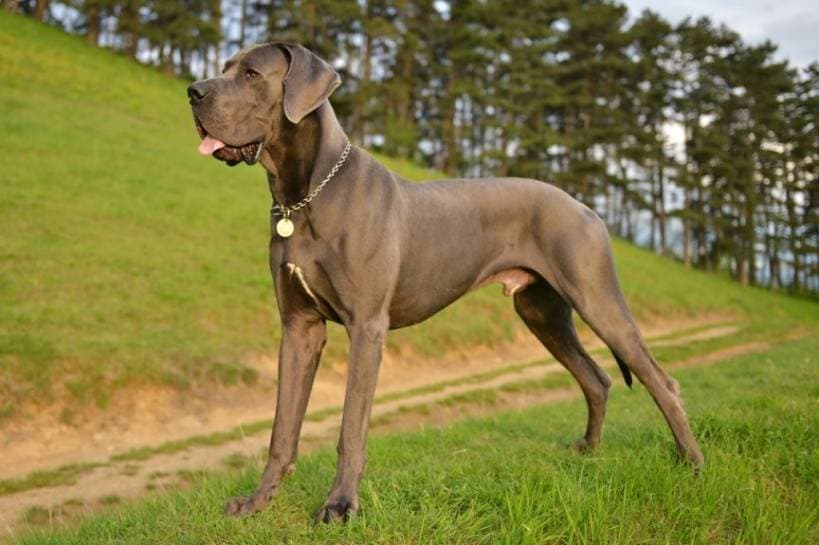
The dog sometimes called the German Mastiff is generally known in English as the Great Dane and in German as the Deutsche Dogge. Despite the English name, the modern breed developed in Germany. Its history is more complex than a tale of Danish dogs disappearing and being recreated as an entirely new animal in one moment.
Names and the development of a breed
Large hunting dogs existed under different regional names before a unified modern standard. The American Kennel Club's history of the Great Dane describes the breed's development from powerful dogs used in hunting towards the companion recognized today. Historical names should not be mistaken for a precise genetic family tree.
Breed histories often combine records with later storytelling. Claims about an exact ancient ancestor, a single national motive or an undocumented experiment should be treated cautiously. In particular, sweeping stories that breeders created the modern Dane through anabolic drugs require evidence and should not be presented as established history.
The Great Dane is also not interchangeable with every breed described as a mastiff or molosser. If you are researching a puppy, use the correct breed name and the relevant registry's standard so that you compare like with like.
Size should serve soundness
A Great Dane is a giant dog, but bigger is not automatically better. Comfortable movement, appropriate body condition and the ability to live an ordinary life matter more than chasing a record height or weight. A standard describes an ideal; it does not predict the exact measurements of every individual.
Photographs can exaggerate size through perspective, and a puppy's large paws are not a reliable health assessment. Meet mature relatives where possible and ask about their mobility and longevity. Avoid choosing a puppy because a seller promises an unusually massive adult or encourages rapid weight gain.
A growing Dane needs suitable nutrition and controlled, age-appropriate activity. Discuss a complete growth diet intended for large or giant breeds with your veterinarian. Do not add calcium or other growth supplements casually. Excess feeding and an unbalanced diet are not responsible ways to develop a strong frame.
Ask for meaningful health information
A responsible breeder should explain the health screening recommended for the breed and provide the actual results for the parents. Ask about hip assessments, heart evaluation, eye examinations and other relevant checks, including any concerns in the wider family. Your veterinarian can help interpret what a result does and does not establish.
Health screening reduces uncertainty but cannot guarantee a puppy will never become ill. A genetic test for one condition is not a complete health certificate. Discuss the breeder's approach to temperament, early social experiences, follow-up support and the return arrangements if circumstances change.
For an adult rescue dog, request the medical and behavioral information available, including medication, mobility and experience with children or other pets. Unknown history does not make a dog unsuitable, but it should influence planning and the questions asked at the first veterinary appointment.
Understand the risk of bloat
Great Danes are among the breeds at risk of gastric dilatation-volvulus, often called GDV or bloat with twisting. Repeated unsuccessful attempts to vomit, distress, drooling, a swollen abdomen or collapse require immediate emergency care. Do not wait for every sign to appear or try to treat suspected GDV at home.
The American College of Veterinary Surgeons explains that a gastropexy can help prevent the stomach from twisting, although it does not prevent all stomach expansion. Discuss preventive surgery and individual risk with your veterinarian before an emergency occurs. No feeding bowl or routine can guarantee that GDV will never happen.
Keep the emergency clinic's details accessible and plan transport for a dog that may be too heavy for one person to lift. Ask another adult how they could help if needed. This practical preparation is particularly valuable with a giant breed and should be considered before acquiring a puppy.
Temperament without alarming myths
A historical hunting role does not mean every Dane is waiting to fight its owner. Equally, a reputation as a gentle giant does not replace supervision or training. Individuals vary, and fear or defensive behavior deserves careful assessment rather than labels such as cowardice or degeneration.
Use reward-based teaching for calm greetings, comfortable handling and walking on a loose lead. Begin while the dog is small enough to manage easily, but continue through adolescence and adulthood. A dog that can rest during visits and accept routine care is better prepared for home life than one trained through intimidation.
Plan for the whole life
Large beds, secure equipment, food, transport and veterinary treatment can cost more for a giant dog. Consider steps, slippery surfaces and the space needed to turn and lie down comfortably. Think ahead to an older dog that may need easier access and more assistance.
Longevity varies, and breed averages cannot predict the years any individual will have. Ask about the health and ages of relatives without accepting a guaranteed lifespan. Choosing carefully, maintaining a healthy body condition and responding promptly to changes are useful commitments you can make. The breed's striking history and appearance are best appreciated alongside responsibility for the dog living with you now.