
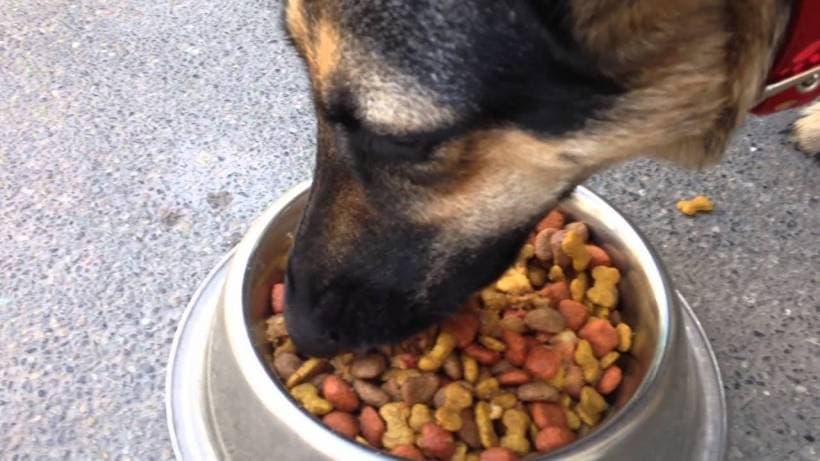
A German Shepherd's diet should support steady growth, a healthy body condition and comfortable digestion. One owner's experience with milk porridge, bones or raw meat cannot establish a balanced feeding plan for every dog. A shiny coat or a good appetite is not proof that all nutritional needs are being met.
Feeding a growing puppy
Choose a complete puppy food suitable for the expected adult size. German Shepherd puppies need controlled growth, not the fastest possible weight gain. VCA's guidance on nutrition for large and giant-breed dogs explains the importance of an appropriate growth formulation.
Do not add calcium or vitamin mixtures to a complete puppy diet without veterinary advice. Extra nutrients can upset the balance. Milk porridge, meat alone and occasional eggs do not replace a properly formulated main food.
Ask for the puppy's current food and feeding schedule before collection. Keep meals familiar during the first days, then make any planned transition gradually. Several measured meals usually suit a young puppy better than one large serving; your veterinarian can tailor the schedule.
Feeding the adult dog
Energy requirements vary with activity, body condition, neuter status and health. A working dog may need a different allowance from a less active household companion. Start with the food's guide, then review weight trends instead of repeatedly filling the bowl whenever it is empty.
Measure all food, including training treats and extras. You should be able to discuss both the product and the daily amount at a veterinary visit. A kitchen scale can make portions more consistent than estimating by eye.
A breed-specific label is not essential if the diet is otherwise appropriate. More useful questions concern nutritional adequacy, manufacturing quality and whether the dog maintains a comfortable weight and normal digestion on it.
Food safety and dental care
Bones are not a necessary source of nutrients or a dependable dental treatment. They can damage teeth or cause digestive injury. Raw animal products also bring infection risks, and rich leftovers may upset digestion. Keep fresh water available regardless of the type of food offered.
Tooth color alone cannot confirm a healthy mouth. Bad breath, difficulty chewing or reluctance to eat hard food deserves attention. Ask your veterinary team about toothbrushing and suitable dental products instead of relying on bone chewing.
When appetite or stools change
A dog that refuses its usual food may have a health problem, especially if refusal is sudden or accompanied by vomiting, diarrhea or lethargy. Do not interpret every change as a harmless preference or keep switching foods without investigating persistent symptoms.
German Shepherds can develop exocrine pancreatic insufficiency, which can cause weight loss despite appetite and abnormal stools. The Merck Veterinary Manual describes how this condition requires veterinary diagnosis and treatment. It cannot be corrected simply by offering more meat or larger portions.
Track weight, stools and the duration of symptoms if digestion is a concern. A clear record helps the veterinarian decide whether a food adjustment, testing or another treatment is appropriate. The aim is a sustainable diet for the individual dog, not a rigid menu based on breed folklore.