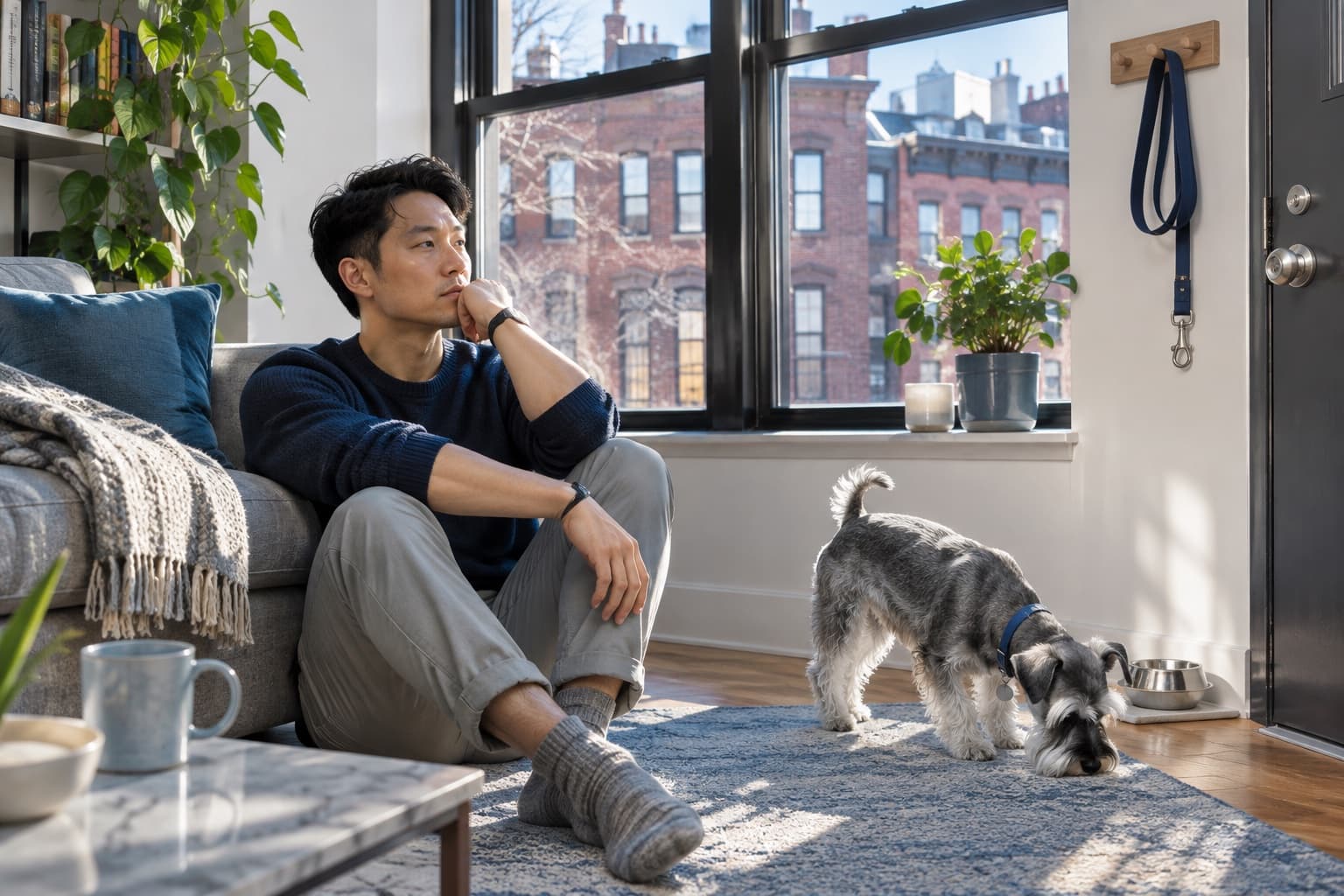
A small dog can fit physically into a Boston apartment and still be a poor match for the household's schedule. The useful question is not “Is a Miniature Schnauzer small enough?” but “Can I meet this particular dog's needs in my building, on my block, and on an ordinary workday?”
Miniature Schnauzers are alert, trainable dogs. The American Kennel Club describes them as adaptable to apartment life while also energetic and attentive. That combination makes them appealing to city residents, but size alone does not guarantee a quiet or low-effort companion. Meet the individual dog and ask about its behavior in a home before you commit.
Start with your building, not the breed list
Read your lease and building rules before contacting a breeder or seller. Confirm that dogs are allowed, whether there are size or breed restrictions, how pets use shared spaces, and what deposits or fees apply. Ask the property manager about elevators, stairs, outdoor access, and where a dog may wait during maintenance visits. Rules vary by building and can change; get the current answer in writing.
If you rent in a multi-unit building, think about sound. A Miniature Schnauzer may bark at hallway footsteps, delivery carts, or other dogs. Ask a breeder or foster caregiver how the dog responds to apartment noises, being left alone, and people passing the door. There is no promise that a breed will never bark. You can plan gradual alone-time training, reward quiet settling, use a white-noise machine if helpful, and coordinate with neighbors while the dog adjusts.
Picture a normal weekday
Write down the times when the dog would be alone, including commuting, errands, and evenings out. Puppies need more frequent supervision and toilet breaks than adults. If your schedule has long stretches away, arrange a trusted dog walker, sitter, or other care before bringing the dog home. Do not assume the dog can simply hold it until you return.
Build a routine with several short opportunities to go outside, a relaxed sniffing walk, a little training, and quiet rest. Adjust the plan to the dog's age, health, and individual response. A dog does not need to be marched for hours every day, but it does need more than a quick trip to the curb. Practice elevator waits, passing people in the lobby, and walking on busy sidewalks in manageable steps.
Inside, prepare a resting place away from the front door and a safe area where the dog can be separated from visitors or maintenance workers. Put away food, cords, and small objects. Use rugs or runners if smooth floors make the dog hesitant. Keep a leash by the exit so you are not searching for it during a sudden bathroom need.
Look beyond the beard and eyebrows
Meet the dog and ask about its adult size, daily activity, noise, comfort around strangers, and ability to settle indoors. If choosing a puppy, ask what the breeder has observed over time rather than expecting a short visit to predict the future. If considering an adult, ask a foster caregiver or previous owner about its actual apartment experience. Watch how it handles hallway sounds and whether it can relax after greeting someone.
Ask what grooming schedule and budget the coat requires. A Miniature Schnauzer's familiar beard and furnishings need routine brushing and trimming; discuss the coat care provided so far and how the dog responds to handling around its face, feet, and nails. Find a groomer close enough to reach on a rainy day and ask how appointments are handled. Regular grooming is part of the ownership plan, not an occasional cosmetic extra.
Make the first month easier
Before pickup, gather the dog's existing food, veterinary records, leash and harness, bed, and familiar items. Set up a quiet home base in the apartment. Introduce the lobby, elevator, nearby streets, and grooming routine gradually. Avoid taking the dog to every neighborhood café or crowded event during the first few days just because Boston offers many places to go.
Use rewards to reinforce the behaviors that matter in shared housing: waiting at doors, walking past a neighbor, settling on a mat, and staying calm when the buzzer sounds. Practice when the hallway is quiet before adding distractions. If barking or fear becomes hard to manage, ask a veterinarian or qualified reward-based trainer for help early rather than allowing the behavior to rehearse repeatedly.
A short fit checklist
Before choosing a Miniature Schnauzer, make sure you have clear building approval, an outdoor toilet route, a plan for absences, a grooming budget, and time for daily interaction. Ask the breeder or caregiver about the individual dog's activity, barking, and time-alone history. Visit a local veterinarian and identify a nearby groomer before you need an appointment.
If the answers work on an ordinary rainy Tuesday, not just on a sunny weekend, your apartment may be a sensible home for that dog. If they do not, consider an adult dog with a known quieter temperament, a different routine, or waiting until your schedule changes. A careful match makes city life easier for both the dog and the people who share the building.
Image: AI-generated editorial image for AnimalsSale; the person and dog are illustrative, not a real listing.