A puppy pickup can look simple on a map: drive to Ohio, meet the breeder, and head back to Chicago. The return trip is your puppy's first major day away from its litter and familiar room, so plan it before you leave.
Before you put down a deposit
Ask the breeder where the puppy has been living, who will be present at pickup, and how long the drive is from the meeting place to your home. Confirm the pickup date and what happens if the puppy is unwell or the litter's veterinary appointment changes. Get the full address and a working phone number. A public parking-lot handoff that prevents you from seeing where the puppy was raised is a reason to pause and ask more questions.
Arrange a veterinary appointment near home for an initial examination. Ask the breeder when the puppy last ate, when it last went outside, and what signs would mean you should call before making the drive. If the puppy seems weak, has repeated vomiting or diarrhea, or is struggling to breathe, postpone the trip and contact a veterinarian rather than trying to solve the problem on the road. Before crossing state lines, ask your veterinarian whether your route requires a health certificate and what the current timing rules are; requirements vary. The AVMA travel guide recommends checking destination rules and planning with a veterinarian.
Set up the car before the puppy arrives
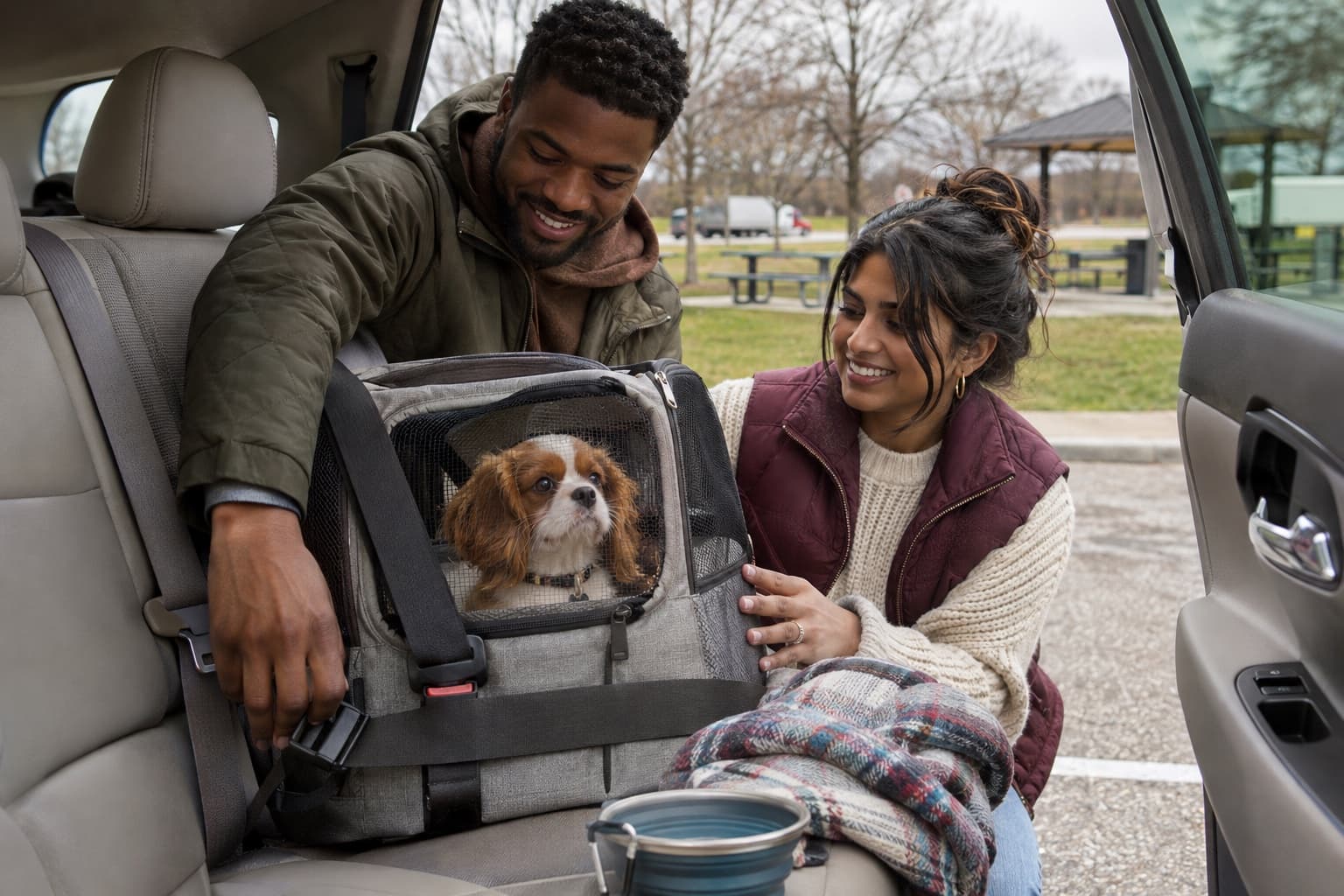
Choose a properly sized, well-ventilated carrier or a suitable secured restraint before pickup day. A carrier should let the puppy sit, lie down, and turn around. Anchor it so it cannot slide or tip during a sudden stop. Keep it out of the front passenger seat where an airbag could create danger. Do not hold the puppy in your lap or let it roam loose around the car; even a small dog can distract the driver or be injured in a collision.
Put washable bedding inside and bring a spare towel, waste bags, paper towels, a leash and properly fitted collar or harness, familiar food, a bowl, and water. Ask the breeder whether a small blanket carrying the litter's scent can come home with the puppy. Keep supplies within an adult's reach without blocking the driver's view or access to controls.
If possible, have a second adult travel with you. One person can drive while the other watches the puppy and handles the carrier at stops. Plan your route before collecting the puppy, including a quiet place to stop. Do not assume every roadside area is appropriate for a young puppy; ask your veterinarian which precautions make sense before the puppy has completed its vaccine series.
At the breeder's home
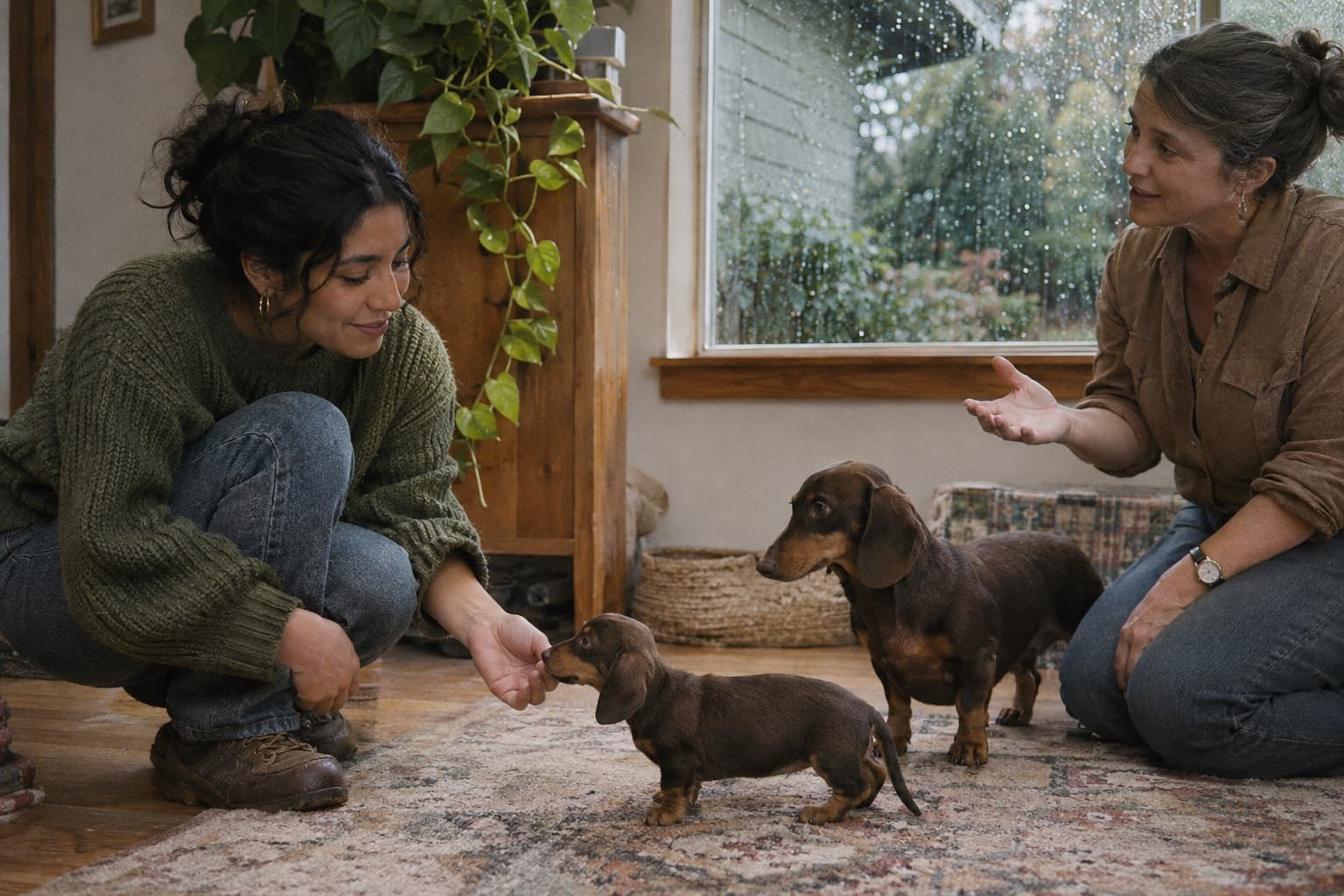
Take time to meet the puppy without rushing to load the car. Observe how it moves, responds to ordinary household sounds, and interacts with its mother and littermates. Ask to see the puppy's living area and at least one parent when available. The American Kennel Club's responsible-breeder guidance recommends visiting the breeder and discussing the puppy's parents and health. Ask for the veterinary record, treatment dates, food details, and written contract before departure; confirm that the puppy's identification matches the paperwork. A responsible seller should be willing to answer questions and should also want to know about the home the puppy is joining.
Make the return drive manageable
Keep the puppy in its secured carrier for the drive. Offer a quiet voice and avoid repeated handling while the car is moving. Follow your veterinarian's advice about feeding and water on the trip; a large meal immediately before a winding drive may not suit every puppy. Never give medication, including a calming product, unless a veterinarian has advised it for this puppy.
On a longer drive, plan stops rather than waiting until there is an accident or the puppy becomes distressed. Use a leash before opening the car door. Choose a clean, low-traffic spot and avoid letting the puppy greet unfamiliar dogs or sniff areas heavily used by unknown animals. Keep the stop brief and return the puppy to the secured carrier before the car moves again. Never leave the puppy alone in a parked car, even for a quick errand; the interior can become unsafe in both hot and cold weather.
The first evening in Chicago
Prepare one quiet, puppy-safe room before departure. Put water, the puppy's usual food, a bed or familiar blanket, and a suitable toilet area where the puppy can find them. Remove loose cords, small objects, and anything it might chew or swallow. Let the puppy explore gradually instead of introducing the entire home, visitors, and other pets at once. Keep the first evening low-key and follow the feeding and rest routine the breeder described.
Save your regular veterinarian's number and the nearest emergency clinic before pickup day. Send the medical records to your clinic and ask when to schedule the first examination. Record what the puppy ate, when it relieved itself, and any questions that come up; that short log helps you give your veterinarian a clear account.
Pickup-day checklist: confirmed address and appointment; breeder contact; contract and veterinary records; route and stops; secured carrier; leash and ID; familiar food, bowl, water, towel, and waste bags; home room prepared; veterinary clinic saved in your phone. A calm plan is more useful than an elaborate shopping list. If the journey or the puppy's health changes, pause and get advice before continuing.
Image: AI-generated editorial image for AnimalsSale; the people and puppy are illustrative, not a real listing.