Bringing home a Maine Coon kitten is exciting, but the first three days are not a test of how quickly the kitten can explore every room. The aim is to give it a secure starting place, preserve familiar routines, and let it approach new sounds and people at its own pace. A little planning can keep a New Jersey apartment from feeling like one large unfamiliar space all at once.
Maine Coons are a large, longhaired breed that needs ongoing coat care. The International Cat Association's breed profile describes the breed's coat and grooming needs. Ask the breeder about the kitten's parents, expected adult size, current grooming routine, and how it responds to brushing. Individual cats vary, so use the kitten's behavior and your veterinarian's advice rather than relying on breed stereotypes.
Before pickup day
Choose a secure carrier and leave it open at home for several days if the timing allows. Put a familiar towel or blanket inside. Ask the breeder which food the kitten currently eats, how often meals are offered, what litter it uses, and whether it has already been examined by a veterinarian. Request the record with dates and clinic details, any test results, microchip information if applicable, and a written contract.
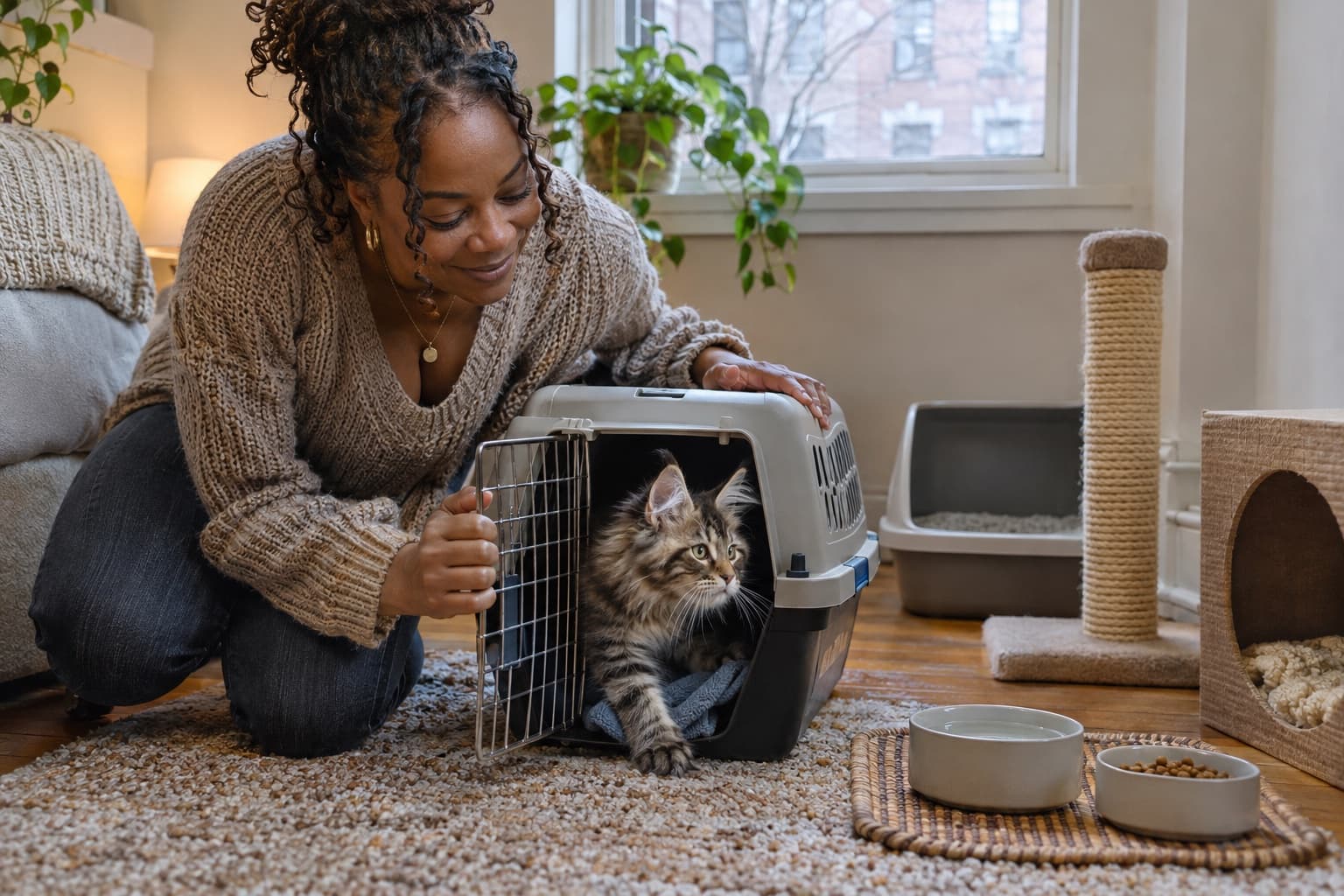
Prepare one quiet room as the kitten's home base. Place food and water apart from the litter box, and include a hiding spot, a comfortable resting surface, a scratching option, and a few safe toys. Check windows and screens, remove cords and small objects, and block gaps where a kitten could become trapped. Keep toxic plants, medications, cleaners, and string-like items out of reach.
The trip to your apartment
Keep the kitten inside the secured carrier in the car. Do not carry it loose through a parking lot or open the carrier in the vehicle. Bring a towel, waste bags, familiar food, water, and the breeder's records. Avoid letting the kitten meet unfamiliar animals during travel. If the trip is more than a short drive, ask the breeder and your veterinarian how to handle feeding and breaks for this kitten.
When you arrive, take the carrier directly to the prepared room. Close the door, put the carrier on the floor, and open its door. Let the kitten decide when to come out. Sit quietly nearby, speak softly, and avoid pulling it from the carrier or placing it in front of a group of people. It may explore immediately or remain hidden for a while; both can be normal responses to a major change.
Day one: keep the world small
Offer the same food and litter the kitten already knows. Show it where the water and litter box are, then give it time to rest. Keep visits brief and calm. Children should sit quietly and let the kitten approach; no one should chase it into a hiding place. If you have other pets, keep them separated at first. Exchange bedding scents before attempting a face-to-face introduction.
Monitor appetite, drinking, litter-box use, energy, and breathing without hovering over the kitten. Write down what it eats and any medication or care instructions. Contact a veterinarian if it refuses food, has repeated vomiting or diarrhea, seems weak, has difficulty breathing, or you are worried about a sudden change. Do not wait for a set number of hours if the kitten looks unwell.
Days two and three: add space at the kitten's pace
If the kitten is eating, using the litter box, and showing curiosity, let it explore one additional kitten-safe area at a time while you supervise. Keep doors to balconies, laundry rooms, and exterior hallways closed. Do not let the kitten roam a shared building corridor; it can slip away quickly and may encounter dogs or hazards. The ASPCA's moving-with-pets advice also recommends starting with one home base and expanding access gradually as a pet settles.
Begin short, pleasant handling sessions. Let the kitten sniff a soft brush, touch its paws gently only if it remains comfortable, and stop before it becomes upset. A Maine Coon's longer coat benefits from getting used to grooming early, but brushing should not become a wrestling match. If you find mats or the kitten reacts painfully, ask your veterinarian or a qualified groomer for help rather than cutting close to the skin.
Keep the carrier available as familiar furniture, not just a signal that something unpleasant is coming. Reward the kitten for approaching it. This can make later veterinary visits less stressful. Continue the breeder's feeding pattern until your veterinarian advises a gradual diet change, if one is needed.
Plan the rest of the first week
Schedule the initial veterinary visit and bring the records, food details, and notes about appetite and litter use. Ask about vaccinations, parasite prevention, microchip registration, and when to discuss spay or neuter planning. Confirm how to reach the clinic after hours. If you have questions about growth or coat care, bring them to that appointment instead of trying to solve everything from online breed descriptions.
The first three days are successful when the kitten has a safe place to retreat, begins learning its new routine, and has access to prompt veterinary care. Let progress be gradual. Your kitten does not need to be outgoing for guests or fearless about every sound to be settling in well.
Image: AI-generated editorial image for AnimalsSale; the person and kitten are illustrative, not a real listing.