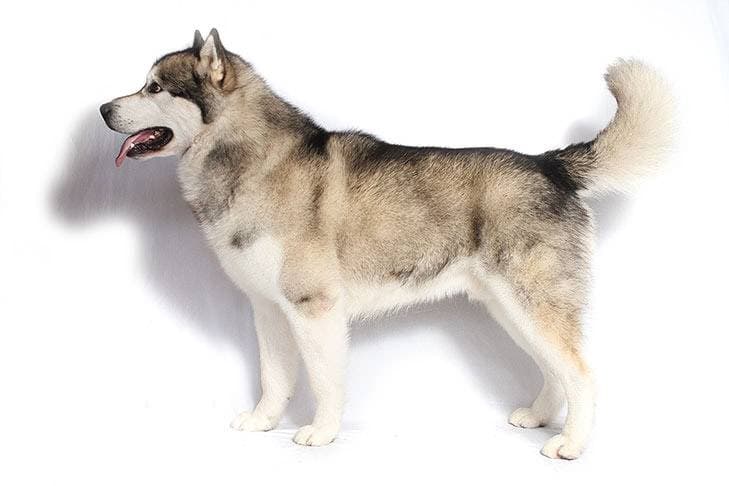
The Siberian Husky is a medium-sized sled dog whose appearance reflects endurance and efficient movement. The breed should not resemble a massively built freight dog or an extremely fine sprint racer. A standard describes the breeding ideal; it is not a complete health assessment or a guarantee of a puppy's future behavior.
What the standard describes
The official AKC Siberian Husky standard gives males a height of 21–23.5 inches and weight of 45–60 pounds; females are 20–22 inches and 35–50 pounds. It favors balanced proportions rather than either size extreme. The body is slightly longer than tall.
Eyes may be brown, blue, one of each or parti-colored. Ears are upright and triangular, and the muzzle is moderate rather than sharply pointed. Nose color varies with coat color, and a lighter-streaked snow nose is acceptable. The double coat is medium in length, with a soft undercoat and straighter outer hairs. Seasonal loss of undercoat is normal.
The standard allows black, gray, agouti, sable, red and white, with varied markings; merle and brindle are disqualifications. Movement should be smooth and efficient, suited to pulling a light load at moderate speed over long distances. The well-furred tail may form a sickle curve when alert but should not curl tightly against the back.
Appearance is only part of the picture
Blue eyes do not establish that a dog has a softer coat, a better temperament or superior health. Brown-eyed Huskies are equally characteristic of the breed. Likewise, a dramatic facial mask is not a reason to overlook poor living conditions or a seller who cannot provide veterinary records.
Owners interested in showing should read the current standard used by their own registry and consult an experienced breed mentor. A pet with a cosmetic fault can still be a much-loved companion. Conversely, an attractive dog should not be bred without appropriate health screening and careful assessment of temperament.
Caring for a working breed
Plan regular activity, opportunities to sniff and explore, and short reward-based training sessions. The breed's sled-dog background does not mean a puppy should pull heavy loads or run beside a bicycle. Ask a veterinarian about suitable activity as the dog grows, and build adult fitness gradually.
Brush through the coat and check the skin during shedding. Tangled fur, soreness, persistent scratching or unusual hair loss deserve attention rather than being dismissed as normal coat change. Grooming also offers a chance to help the dog become comfortable with gentle examination of paws and ears.
A breed standard cannot tell you whether a particular Husky will settle happily in your home. Ask about the parents' health tests, the puppy's early experiences and the breeder's support. For an adult dog, discuss behavior around other animals, escape attempts and comfort when alone. These practical details are as important to daily life as height, eye color and markings.
Keep copies of screening reports and vaccination records with your dog’s identification details, so that future caregivers have useful information at hand.