The English Cocker Spaniel is an active gundog with an expressive face, long ears and a strong interest in exploring scents. Its cheerful reputation makes it a popular companion, but a suitable home must provide exercise, patient training and regular coat care.
Background and appearance
The AKC English Cocker Spaniel profile describes a compact sporting dog. Developed as a flushing gundog, the English Cocker is distinct from the American Cocker Spaniel. Working and show lines can differ in appearance and activity needs, so ask about the particular family rather than relying only on the breed name.
English Cockers have long, hanging ears and feathering on the legs and body. Coats occur in several colors and patterns, including solid colors and combinations with white. A natural tail does not need to be removed for ordinary companion life. Choose health and comfortable movement over cosmetic expectations.
Activity with room to sniff
Daily walks should include opportunities to investigate the environment, alongside games and training. A garden adds space but does not replace shared activity. Match exercise to age and fitness, and avoid pushing a growing puppy through prolonged running or repetitive jumping.
Scent-based games suit many spaniels. Hide a few pieces of the daily food ration in easy places or teach the dog to find a familiar toy. Increase difficulty gradually and stop while the dog remains interested. Allow rest between activities rather than treating constant excitement as the goal.
Practice recall in secure surroundings before relying on it near birds or other wildlife. Use a leash or appropriate long line where needed. Reward the dog for checking in with you so that outdoor exploration and cooperation can develop together.
Training and family routines
Teach calm greetings, comfortable handling and settling in a chosen bed. Keep sessions short and rewarding. A lively dog may need help managing excitement, not harsher correction. Introduce time alone gradually and arrange care when an absence would exceed the dog's needs.
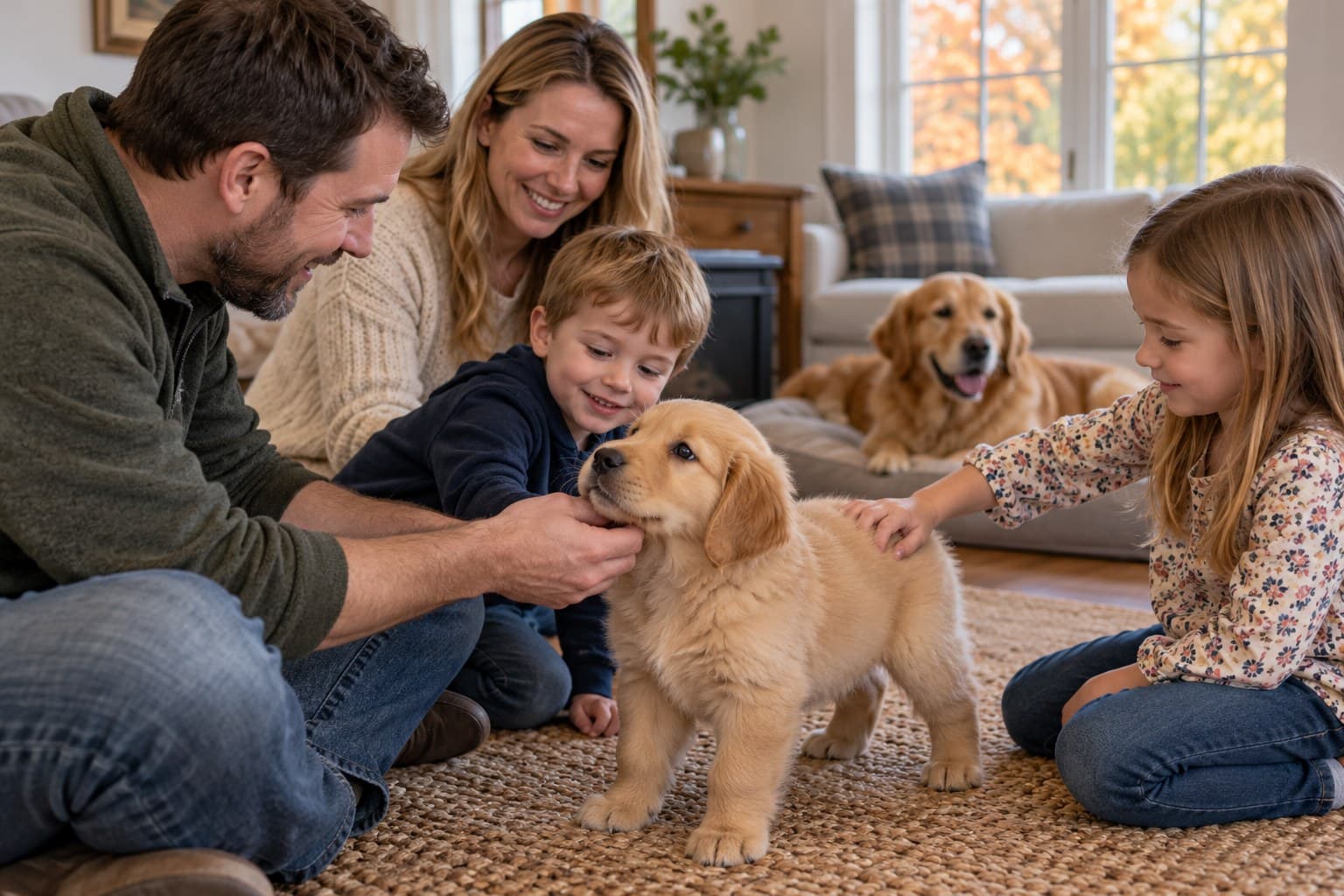
Supervise interactions with children and provide a retreat where the dog can sleep without disturbance. Introduce other animals slowly and manage food and toys sensibly. No breed description guarantees that every dog will enjoy every child, visitor or unfamiliar animal.
Coat, ears and health
Comb feathered areas regularly to prevent tangles, especially around the ears, legs and underside. Check for seeds, burrs and debris after walks. Professional grooming may help maintain a practical coat, but it does not replace checks at home.
Inspect ears for odor, redness or discomfort. Clean only as advised with a suitable product; routine aggressive cleaning or pushing swabs into the canal can cause problems. A correctly fitted snood may keep ears out of food, but never tie the ears tightly or leave accessories on unsupervised.
Ask for relevant health-screening records for both parents and the puppy's veterinary history. Maintain dental and nail care, feed measured portions and monitor body condition. A good match depends on the individual dog's needs and the household's ability to meet them throughout its life.