A kitten's care routine should make it comfortable with ordinary handling while helping you notice changes early. Grooming, nail checks, dental care and preventive veterinary visits all contribute, but none should become a struggle simply to complete a checklist. A shiny coat or playful mood is reassuring without proving that every aspect of health is normal.
Start with a veterinary examination and bring any records supplied by the breeder, rescue or previous caregiver. Ask about diet, vaccinations, parasite prevention and follow-up appropriate to the kitten's age and circumstances. A very young orphan needs a different plan from a healthy weaned kitten. Do not apply one schedule or a collection of shop-bought products to every animal.
Build cooperation in small steps
Choose a quiet moment when the kitten is comfortable and alert. Briefly touch an area it accepts, reward cooperation and stop before it struggles. Introduce the brush, carrier and other equipment gradually. A session that ends calmly is more useful than a complete grooming procedure that leaves the kitten frightened of the next attempt.
Watch for turning away, tension, attempts to escape or sudden stillness. Freezing does not necessarily mean acceptance. Give the kitten a break and make the next step easier. Children should participate only with suitable adult guidance. Never lift or suspend the kitten by the scruff, and do not force it onto its back because a handling guide suggests that position.
Choose grooming tools for the coat
Short, long, dense and curly coats need different approaches. Ask a groomer or veterinary professional to show you tools suited to your kitten, including how lightly to use them. A comb should not scrape the skin, and a brush advertised for removing undercoat is not automatically appropriate for every breed. The aim is to remove loose hair and prevent tangles without damaging skin or healthy coat.
Work gently in a comfortable direction and check beneath the surface where hair can knot. Common trouble spots include behind the ears, beneath the legs and around areas rubbed by equipment. There is no need to brush against the coat simply to create volume. Stop if hair pulls or the kitten becomes uncomfortable, and avoid turning grooming into a contest of restraint.
Handle mats safely
A small loose tangle may be worked apart gently if the cat remains comfortable. Dense mats close to the skin should be handled by a professional. Do not pull repeatedly or cut blindly with scissors: skin can be drawn into the mat and injured. Extensive matting, soreness or an animal that cannot tolerate removal may require veterinary help.
Do not dismiss repeated vomiting as hairballs
Cornell's hairball guidance explains that swallowed hair can sometimes accumulate and cause problems. Brushing may reduce loose hair, but it does not establish the cause of every episode of retching. Repeated vomiting, reduced appetite, lethargy or unproductive retching needs veterinary assessment, particularly in a kitten.
A coughing cat can look as though it is trying to bring up hair, so describe the event carefully and record a video if that can be done without delaying care. Do not give laxatives, oils or a new hairball treatment without advice. A product label cannot tell you whether the kitten has an obstruction, respiratory problem or another illness.
Check and trim nails carefully
Ask the veterinary team to demonstrate nail trimming before attempting it alone. Choose suitable clippers that you can control comfortably; neither guillotine nor scissor style is compulsory for every owner. Introduce the tool without cutting at first, then practice a gentle paw touch and a brief look at an individual nail.
VCA's kitten-grooming advice describes avoiding the quick, the part containing nerves and blood vessels. Remove only a small tip when you can identify the safe area. If you are unsure, stop and seek help. It is reasonable to trim one or two nails at a time rather than complete every foot in one session.
Do not assume nail trimming is always painless: cutting the quick hurts and can bleed. Ask what to keep available and how to respond if a minor nick occurs. Persistent bleeding, a torn nail, swelling or lameness needs professional attention. Nail texture alone cannot diagnose a nutritional deficiency or bacterial disease.
Provide suitable scratching surfaces even when nails are trimmed. Scratching is a normal activity, not a sign that the kitten needs punishment. Stable posts and horizontal options can help you discover its preferences. Place them where the kitten spends time and reward appropriate use while protecting vulnerable furniture.
Bathe only for a reason
Most healthy kittens do not require routine full baths. Specific soiling, contamination or a prescribed skin treatment may justify one, but bathing is not automatically an essential weekly ritual. Ask about local cleaning of a small dirty area first. A sick, very young or chilled kitten needs an individual plan rather than a stressful bath.
Prepare a warm room, non-slip footing, towels and a cat-appropriate product before starting. Use comfortably lukewarm water and gentle handling, keeping water away from the face and ears. Follow product instructions and rinse thoroughly. Do not substitute human shampoo, a dog flea wash, household disinfectant or essential oils.
If the kitten panics, stop and reassess instead of adding force. Dry gently with a towel and keep it comfortably warm, with freedom to move away from a heat source. Avoid hot or frightening dryers. Never leave the animal unattended in water or under drying equipment while fetching another item.
Eyes and nose: observe before treating
Look for comfortable open eyes and notice changes in discharge, redness or rubbing. A little dried material on surrounding fur may be gently softened with a clean damp cloth if the kitten tolerates it. Use a separate clean area of cloth for each eye. Do not put an unspecified lotion, human eye drop or leftover medication into the eye.
Squinting, a cloudy appearance, marked discharge or an eye held closed deserves prompt veterinary attention. Do not continue wiping as though cleaning alone will resolve the cause. Similarly, persistent nasal discharge, difficulty breathing or a change in feeding needs assessment. Avoid picking at firmly attached crusts or blocking the nostrils with ointment.
Ear care without damaging the canal
VCA's ear-cleaning guidance notes that most cats do not need routine ear cleaning. Inspect the visible ear gently, but do not assume it must be scrubbed on a calendar or cleaned after every bath. Excess debris, odor, redness, scratching or head shaking calls for assessment. Dark material may have several causes and is not proof of ear mites.
Use an ear cleaner only when appropriate for the kitten and as directed. Hydrogen peroxide and alcohol can irritate the canal. Do not insert cotton swabs, sticks or other objects into it, and do not add powders, mineral oil or medication chosen from an old product list. A damaged or painful ear needs a diagnosis before cleaning or treatment is selected.
Start dental care gradually
Cornell's information on feline dental disease explains that gum and tooth problems can be painful. Persistent bad breath should not be accepted as normal because a cat eats meat. Drooling, dropping food, chewing differently or resisting facial touch warrants a veterinary check. A cat may continue eating despite oral discomfort.
Introduce gentle lip handling and, when appropriate, a cat toothbrush and cat-safe toothpaste in small steps. Do not use human toothpaste or scrape tartar with household tools. If gums are inflamed or handling is painful, seek advice before brushing. Home care supports prevention but does not replace examination and treatment of existing disease.
Ordinary dry kibble does not guarantee clean teeth, and wet food should not automatically be blamed for dental disease. Ask about evidence-supported dental products suitable for the individual kitten when it is old enough. Professional dental procedures require an appropriate veterinary plan; a quick look at the visible tooth surface cannot assess everything below the gumline.
Feed for growth and monitor progress
Offer a complete diet suitable for kittens and keep fresh water available. Use the existing feeding history to plan a transition, and ask about portions as the kitten grows. A mixture of meat, dairy products and added vitamins is not automatically balanced. Home-prepared diets require professional formulation rather than improvisation.
Track weight as advised and report poor growth, unexpected loss or a persistent change in appetite. Keep feeding stations quiet and separate from litter boxes. In a multi-pet home, supervise enough to know which animal is eating which food. Treats should remain a small part of the overall intake rather than displacing necessary nutrition.
Grass is not required to make a cat vomit or clean its stomach. Do not encourage vomiting as a health routine. Identify plants before allowing access, and keep toxic species out of reach. UC Davis's lily-toxicity guidance stresses that suspected exposure to true lilies or daylilies requires immediate veterinary attention, including exposure to pollen or vase water.
Prevention and a safe home
Work with your veterinarian on vaccination and parasite prevention appropriate to age, health and exposure. Record products and dates so doses are not accidentally repeated by different caregivers. Never use a dog flea product on a kitten or combine treatments without checking suitability. Indoor living reduces some risks but does not eliminate the need for preventive advice.
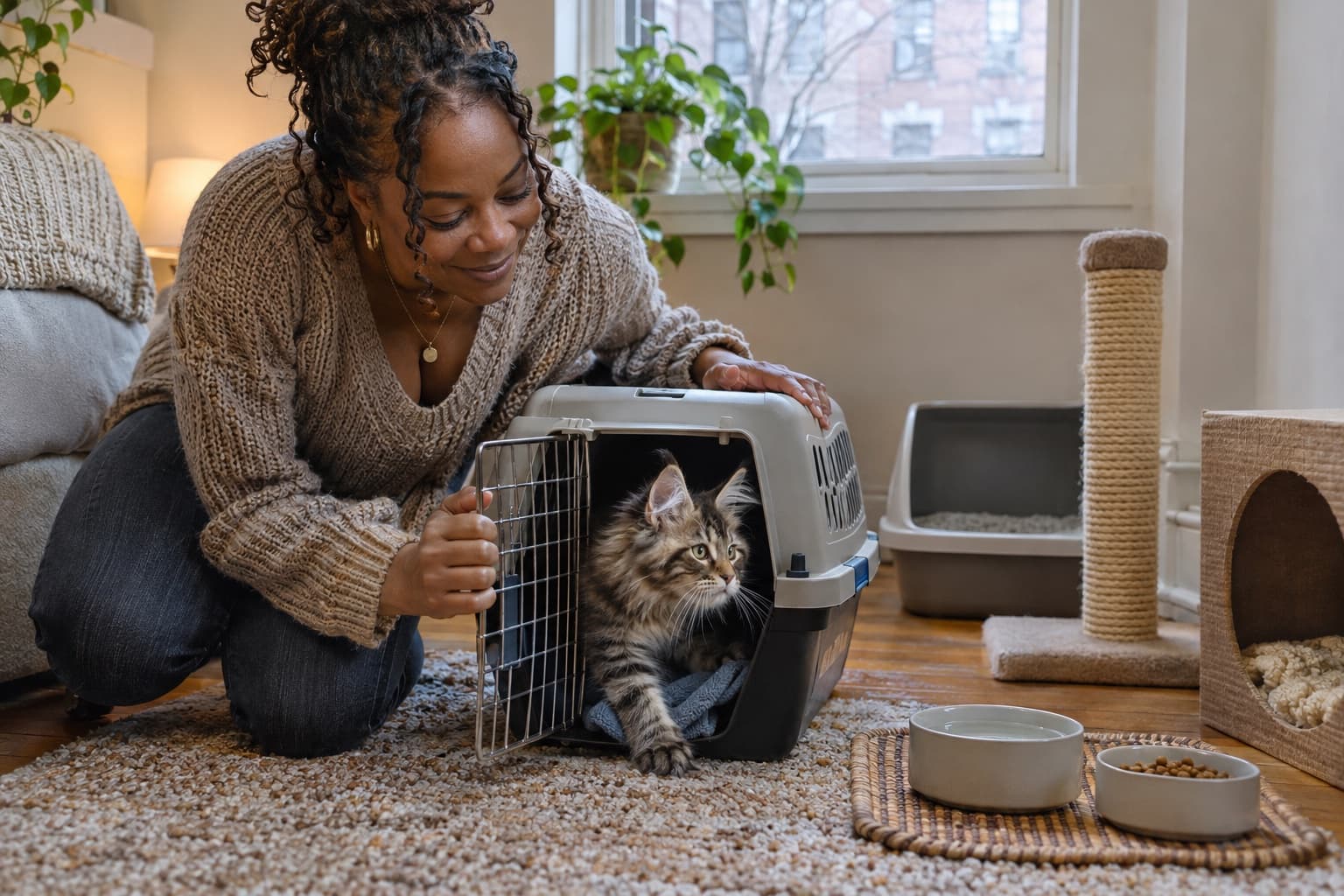
Secure medicines, cleaning products, cords, strings and small swallowable objects. Check washing machines, dryers and reclining furniture before use. Provide safe play and quiet sleep, and introduce other animals gradually. A carrier left open with familiar bedding can become part of the home rather than appearing only before an appointment.
Know when to seek help
Difficulty breathing, collapse, suspected poisoning, severe injury or repeated straining with little or no urine requires urgent veterinary care. Young kittens can deteriorate quickly, so ask promptly about reduced feeding, persistent diarrhea, repeated vomiting or unusual weakness. Do not give human painkillers or try to make the kitten vomit unless specifically instructed.