
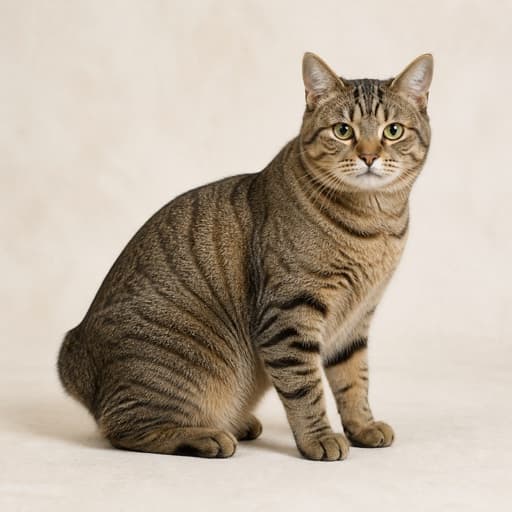
Who is this breed suited to?
The Manx can be an affectionate, playful companion, but suitability must include an informed discussion of spinal and neurological health.
Daily time commitment
Offer interactive games and accessible resting or climbing places, adjusting the setup to the individual cat's comfortable movement. A quiet manner does not mean inactivity. Changes in jumping, hind-leg function or litter-box habits need investigation rather than stricter training.
Coat and everyday care
Groom according to coat length: short and longhaired Manx both have dense coats. Comb the longer furnishings carefully, particularly under the legs.
Challenges to plan for
Manx syndrome can involve the hind limbs, bladder and bowel. A kitten that looks appealing in a photograph still needs a veterinary assessment and a clear history.
How does it compare?
The Japanese Bobtail has a different short-tail form and breed background. It should not be assumed to share the Manx's tail-associated health situation merely because both have unusual tails; compare actual veterinary findings and handling needs.
Questions to ask a breeder
Ask about Manx syndrome in relatives, the kitten's age and examinations, and documented normal movement and elimination. Request an explanation of the breeding approach and ongoing support if difficulties emerge. A breeder's general assurance should not replace the individual kitten's clinical history.
Sources and further reading
Reviewed October 2026. Breed tendencies do not predict an individual cat. Age, health, upbringing and environment all affect care and behaviour.