
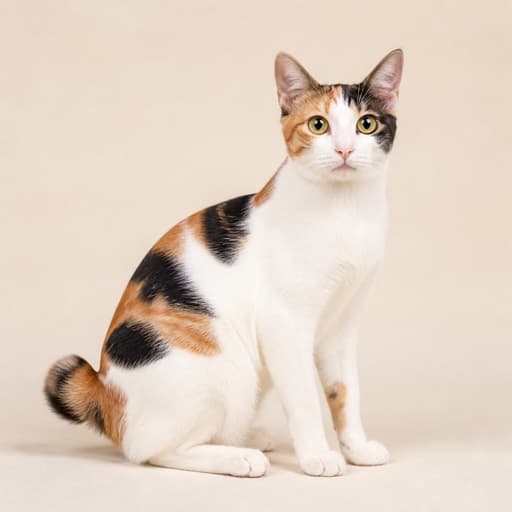
Who is this breed suited to?
A Japanese Bobtail is a good candidate for a household that welcomes an agile, inquisitive cat and frequent interaction.
Daily time commitment
Rotate interactive toys and provide secure climbing routes, rewarding simple games when the cat chooses to participate. Short, engaging opportunities suit an easily distracted player better than trying to meet a fixed exercise quota.
Coat and everyday care
Both longhair and shorthair varieties exist. Comb the short coat periodically and give the longer coat more frequent attention, especially around furnishings. Treat the bobtail gently: individual tails vary in rigidity and must never be pulled or straightened to inspect their shape.
Challenges to plan for
Jumping ability makes window screens and stable high furniture important. Children need to learn respectful handling, particularly around the tail.
How does it compare?
The Kurilian Bobtail also has a naturally short tail and comes in two coat lengths, but has a heavier, more substantial build. These are separate breeds; a similar tail outline does not mean identical structure or care.
Questions to ask a breeder
Ask which coat variety the kitten has, how its tail has been examined and whether movement and toileting are normal. Request the parents' health history and veterinary records, and discuss how the kitten practises grooming, travel and meeting people.
Sources and further reading
Reviewed October 2026. Breed tendencies do not predict an individual cat. Age, health, upbringing and environment all affect care and behaviour.