
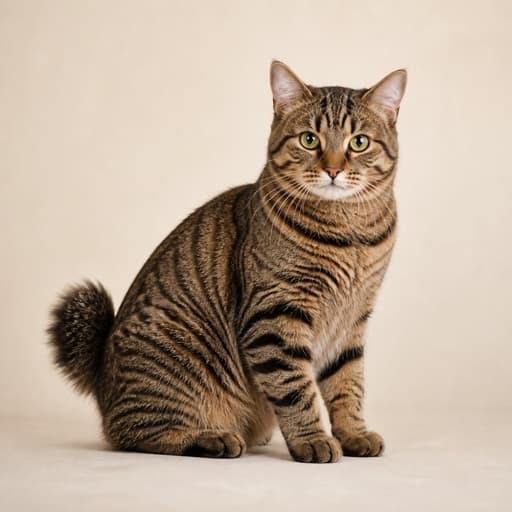
Who is this breed suited to?
The Kurilian Bobtail may suit a household wanting a substantial, inquisitive companion with access to climbing space. TICA describes affectionate, playful cats, but a natural-breed label and rugged appearance are not guarantees of health or compatibility with every other pet.
Daily time commitment
Provide sturdy high perches and shared games that let the cat investigate and jump safely. Mix activity with opportunities to settle beside people.
Coat and everyday care
The breed has shorthaired and semi-longhaired varieties. TICA suggests weekly brushing as a starting point; check the actual coat for loose hair or tangles and adapt the routine.
Challenges to plan for
Every tail has its own structure, so appearance alone is a poor health assessment. Ask a veterinarian about any discomfort, movement change or toileting difficulty.
How does it compare?
The Japanese Bobtail shares the short-tail appearance but is generally more finely built, whereas the Kurilian has a broader, substantial body. Compare the actual adults, coat varieties and social histories rather than treating all bobtailed cats as one type.
Questions to ask a breeder
Ask to see the parents, their health records and the kitten's veterinary examination. How were its tail, movement and toileting assessed? Discuss grooming, carrier experience and introductions to animals, and ensure the breeder explains any known family conditions without relying on claims of natural hardiness.
Sources and further reading
Reviewed October 2026. Breed tendencies do not predict an individual cat. Age, health, upbringing and environment all affect care and behaviour.