
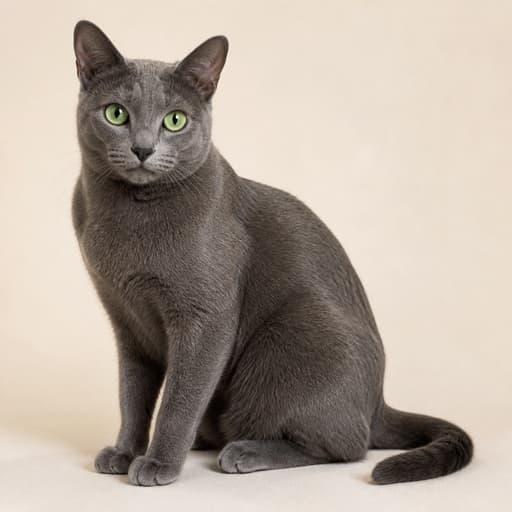
Who is this breed suited to?
The Korat fits a household wanting a strongly involved, playful companion rather than a cat expected to remain quietly in the background.
Daily time commitment
Offer interactive toys, manageable food puzzles and daily opportunities for contact. Reward learning without repeatedly demanding performance. When introducing another pet, preserve the Korat's access to quiet resting places and familiar attention, with separate resources while relationships develop.
Coat and everyday care
CFA recommends weekly brushing of the short single coat. Use gentle strokes and let the cat take breaks; a coat that sheds lightly still needs routine skin checks. Its texture does not make the Korat a reliably low-allergen choice.
Challenges to plan for
An attention-seeking cat can be a poor match for people expecting complete self-sufficiency. Abrupt changes in sociability or activity deserve investigation rather than being labelled jealousy. Observe the parents and discuss how the kitten has handled changes in its environment.
How does it compare?
The Russian Blue is another blue-coated breed, but coat colour does not establish the same ancestry or personality. The Korat's single coat and distinctive head shape offer useful physical differences; meet individual cats rather than relying on colour-based temperament assumptions.
Questions to ask a breeder
Ask for documented parental results for the Korat-associated GM1 and GM2 gangliosidosis variants, with identities matching the pedigree. Also discuss family medical history, routine veterinary care and socialisation; testing for those conditions cannot certify freedom from every health problem.
Sources and further reading
- CFA: Korat
- UC Davis Veterinary Genetics Laboratory: Korat GM1 and GM2 gangliosidosis
- CFA: Russian Blue, comparative coat and head structure
Reviewed October 2026. Breed tendencies do not predict an individual cat. Age, health, upbringing and environment all affect care and behaviour.