
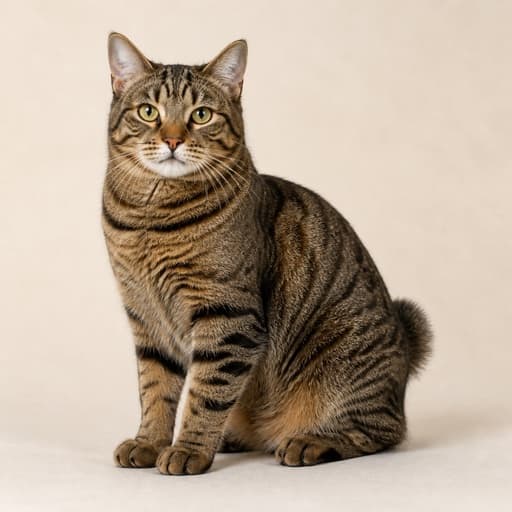
Who is this breed suited to?
The American Bobtail combines a substantial, athletic build with a commonly affectionate, adaptable manner. It may suit a household wanting an interactive companion without assuming that a wild-looking face means wild ancestry: this is a domestic breed.
Daily time commitment
Offer stalking and pouncing games, opportunities to carry toys, and places to watch household activity.
Coat and everyday care
Both coat lengths benefit from weekly brushing or combing, with extra attention wherever loose fur collects. Check the longer coat around the hindquarters without pulling the tail.
Challenges to plan for
A bobtail is not proof that the spine and hips are problem-free. CFA notes potential spinal, hip and continence concerns, particularly in completely tailless individuals. Obtain a veterinary assessment rather than treating an unusually short tail as a premium feature.
How does it compare?
The American Curl is another companion breed with an unusual inherited feature, but curled ears require different handling from a Bobtail's short tail.
Questions to ask a breeder
Has the kitten been checked for normal movement and toileting? What spine or hip problems have occurred in relatives? Ask about tailed kittens too, the parents' veterinary histories, and the written plan if a congenital problem becomes apparent after placement.
Sources and further reading
Reviewed October 2026. Breed tendencies do not predict an individual cat. Age, health, upbringing and environment all affect care and behaviour.