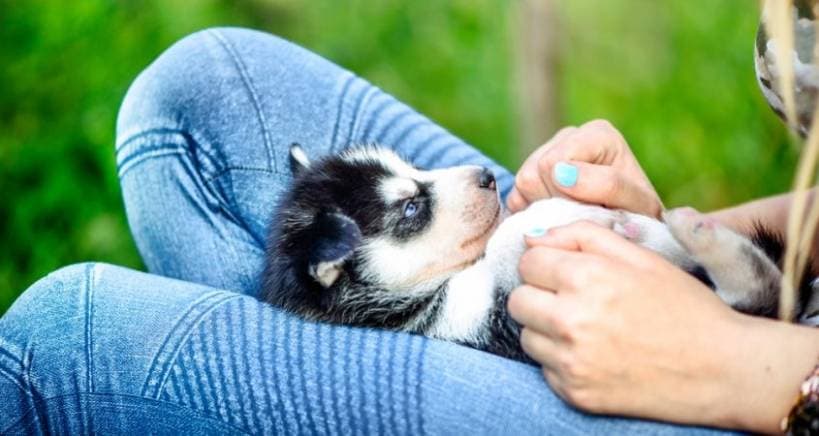
Grooming is easier when a puppy learns that gentle handling predicts something pleasant. Begin with brief touches and rewards before attempting a full bath or nail trim. Stop before the puppy becomes distressed, and build up gradually over several sessions.
Bathing and coat care
A full bath is not necessary after every walk. Wipe dirty paws or a small soiled area when that is enough. If bathing is needed, use comfortably lukewarm water, a non-slip surface and a shampoo suitable for the puppy's age and skin.
Rinse thoroughly, keep water out of the eyes and ears, and towel-dry in a comfortable room. Never leave the puppy unattended in a bath. Ask a veterinarian before bathing a very young, weak or unwell puppy, or before using medicated or parasite shampoos.
Brush according to coat type and check for tangles without pulling. A groomer can demonstrate suitable tools and explain how the adult coat may differ from the puppy coat.
Nails and teeth
Check nails regularly rather than cutting to a fixed calendar. Trim small amounts and avoid the sensitive quick. If the nails are dark or the puppy struggles, ask a professional to show you the technique before continuing.
Introduce toothbrushing with a soft pet brush and dog toothpaste, aiming for a daily routine as tolerance develops. VCA's guidance on brushing a dog's teeth explains gradual introduction and appropriate products. Human toothpaste is not suitable for dogs.
Ears and skin
Inspect the outer ears during calm handling, but do not insert cotton swabs into the canals. Routine ear medication is unnecessary unless prescribed. Redness, odor, discharge, head shaking or pain should be checked by a veterinarian.
Use grooming time to notice lumps, skin irritation or changes in comfort. Keep sessions short and record anything unusual. Early, pleasant practice makes routine care easier while helping you recognize when the puppy needs professional attention.