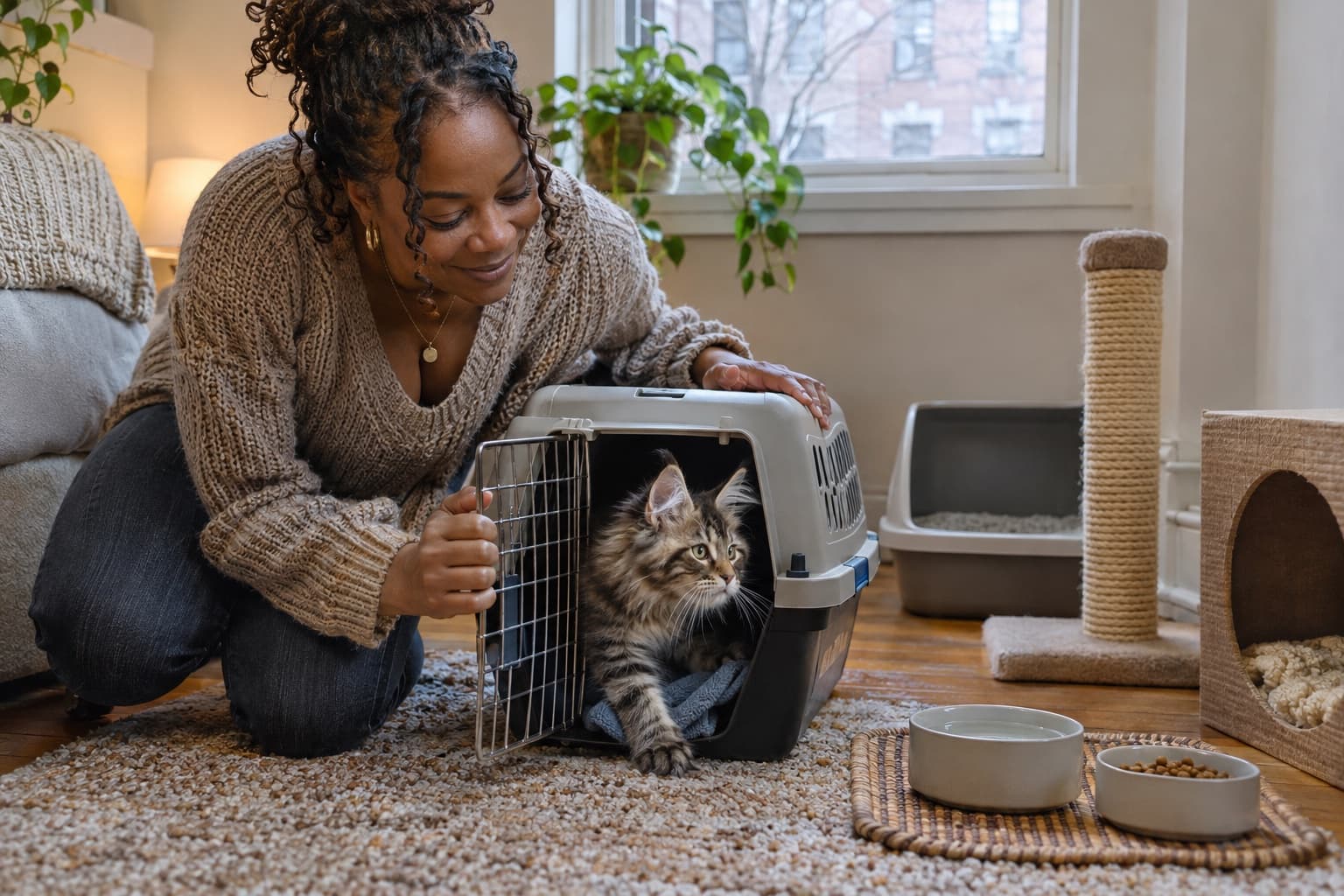
Bringing another cat home changes the resident cat's environment and introduces uncertainty for the newcomer. Neither animal should be expected to welcome immediate contact. A gradual introduction gives both a chance to feel secure and allows the owner to notice tension before it becomes a fight.
Cats Protection's introduction guide recommends taking the process slowly. There is no reliable rule that cats become friends after a few days or that a month marks failure. Some form a close bond; others comfortably share a home while keeping their distance. Peaceful coexistence is a worthwhile outcome even without shared beds or mutual grooming.
Prepare separate spaces
Set up a secure room for the newcomer with food, water, a litter box, hiding places, a bed and opportunities to scratch and play. Keep these resources appropriately separated within the room. Let the cat settle and maintain the resident's familiar routine. Ask your veterinarian about health checks and any precautions needed before the animals share space or equipment.
Provide enough resources throughout the home so that one cat cannot control access to essentials. Separate feeding stations, litter boxes and resting areas are more useful than expecting cats to share everything. Plan routes around furniture and access to higher resting places, while considering each animal's mobility.
Start with scent and exploration
When both cats are comfortable, introduce small scent exchanges, such as bedding that each has used. Place the item where the other cat can investigate or avoid it. Do not rub one cat with an unfamiliar scent or put the object into its only safe bed. Observe the response before increasing exposure.
Allow exploration of shared areas at different times while preventing direct contact. This lets each cat investigate without being approached by the other. Keep doors and barriers secure, and involve household members so an accidental meeting does not undo careful preparation.
Add brief visual contact
Use a secure barrier that prevents reaching, jumping over or slipping through. Begin at a distance where both cats can remain relaxed, and keep sessions short. Pleasant activities may help, but do not make a hungry or frightened cat eat beside the other animal. Moving bowls closer is not a required goal.
Staring, crouching, tail lashing, hiding or blocking an exit can indicate that the step is too difficult. Increase distance or return to an earlier stage. Hissing is a request for space, not a reason to spray water or punish the cat. The 2024 intercat tension guidelines emphasize recognizing subtle pressure as well as obvious conflict.
Supervise shared space
When repeated barrier sessions are comfortable, try brief meetings in a room with escape routes and separate resting options. Do not carry the cats toward each other or hold one still for inspection. End the session before tension builds and separate them again when supervision is unavailable until the arrangement is reliably safe.
If a fight occurs, do not put your hands between the cats. Create separation safely with a barrier and allow them to settle apart. Injuries and persistent distress need professional attention. Resume introductions only after reassessing the setup and, where necessary, obtaining veterinary and behavior support.
Review the fit
Age, activity, health and previous experience all matter; choosing cats of different sexes does not guarantee compatibility. Give each individual attention in the way it enjoys. If tension continues, consult a qualified feline behavior professional rather than escalating contact. Some homes need long-term separation or a different placement plan, and the cats' welfare should guide that decision.