
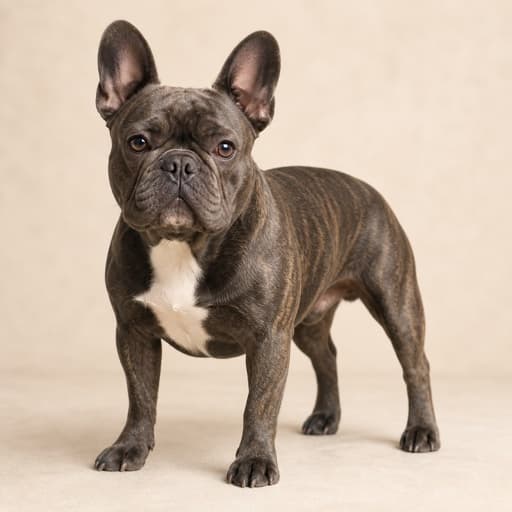
Who is this breed suited to?
Consider a French Bulldog only after assessing how comfortably the individual breathes and moves, and whether you can provide attentive close-companion care.
Daily time commitment
Use short, comfortable walks and gentle play, adapting to temperature and breathing. The RKC's exercise category is not a target to force a struggling dog through.
Coat and everyday care
Brush weekly and check the face folds, ears and skin for moisture or irritation. Make comfortable, unobstructed breathing a priority over appearance.
Challenges to plan for
The short face makes functional assessment crucial. Noisy or laboured breathing and poor exercise tolerance deserve veterinary investigation, not acceptance as normal charm.
How does it compare?
The Bulldog shares short-faced care considerations but differs in frame and ears; neither should be selected for exaggerated facial or body features.
Questions to ask a breeder
What respiratory function assessment do the parents have? Can I observe their breathing during ordinary movement and review other health records and any surgery history?
Sources and further reading
Reviewed October 2026. Breed tendencies are not a prediction for an individual dog. Exercise guidance concerns healthy adults; age, condition and weather change the plan.