Who is this breed suited to?
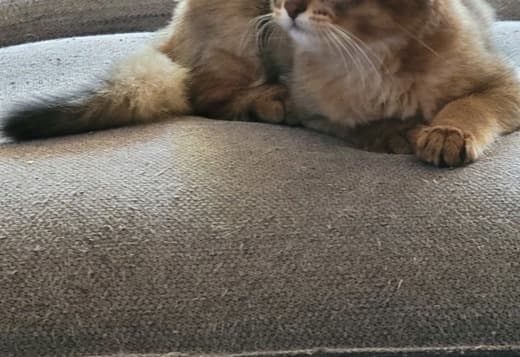
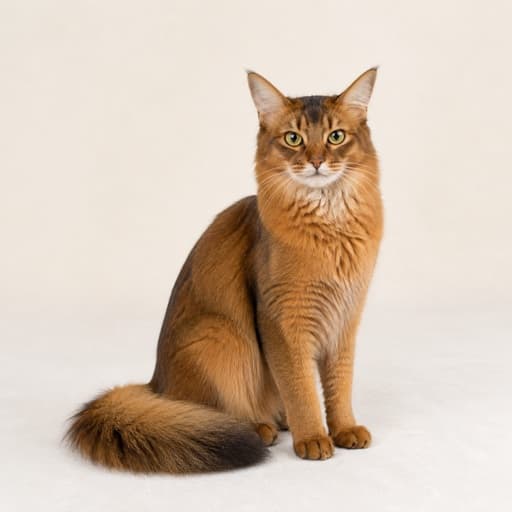
A Somali may suit someone who enjoys an active, curious cat and wants to take part in its play. The plumed tail and ticked coat are distinctive, but the practical choice is whether the home welcomes an investigative companion that may learn to open cupboards.
Daily time commitment
Arrange climbing, searching and interactive play with toys the cat can actually catch. Check storage and windows so curiosity has safe outlets. A selection of toys helps, but it should not replace daily contact or observation of which activities remain enjoyable as the cat matures.
Coat and everyday care
CFA recommends weekly combing of the silky coat, with attention to the ruff, underside and full tail. Check for tangles and oily clumps rather than assuming that a relatively easy long coat never needs help. Ask for a gentle technique before knots develop.
Challenges to plan for
There are relevant inherited-health questions behind the attractive appearance. UC Davis offers tests for forms of progressive retinal atrophy affecting Somalis and for feline pyruvate kinase deficiency. Test results concern particular variants and should accompany, rather than replace, a family health discussion.
How does it compare?
The Abyssinian is the direct short-haired comparison: Somalis developed from long-haired cats in Abyssinian lines. The Somali name does not establish that the breed originated in Somalia; it was chosen during development in reference to a neighbouring country.
Questions to ask a breeder
Ask to see identifiable parental results for the relevant PRA and PK-deficiency variants and discuss illnesses not covered by those tests. How do adults behave during combing and play, and what experience do kittens have with household activity and gentle handling?
Sources and further reading
- CFA: Somali
- UC Davis Veterinary Genetics Laboratory: Somali PRA tests
- UC Davis Veterinary Genetics Laboratory: feline PK deficiency
- CFA: Abyssinian comparison
Reviewed October 2026. Breed tendencies do not predict an individual cat. Age, health, upbringing and environment all affect care and behaviour.