
Who is this breed suited to?
The Selkirk Rex may suit someone who enjoys an interactive companion and is prepared to learn how a curly coat behaves. Meet both coat lengths if possible: a short-curled cat and a long-haired Selkirk can create different practical grooming demands despite sharing the same breed name.
Daily time commitment
Set aside time for attention and play, with a choice of resting places where the cat can withdraw. CFA describes a people-focused breed that can enjoy energetic games as well as laps; use the individual's preferences rather than expecting constant activity or constant cuddling.
Coat and everyday care
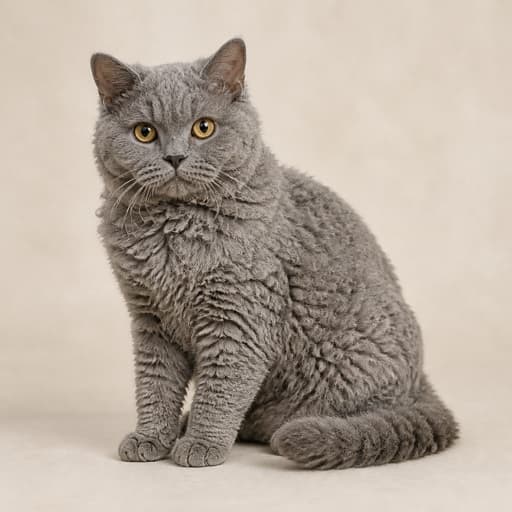
Handle the curls gently and learn to separate clumps without tugging. CFA advises occasional combing, with a pick sometimes useful for longer coats. Inspect beneath the surface regularly: a deliberately tousled appearance is not an excuse to leave tight mats or irritated skin unnoticed.
Challenges to plan for
Curled whiskers can be fragile, so rough facial grooming is inappropriate. The coat's unusual texture also attracts allergy marketing, but appearance alone does not establish suitability for an allergic household. Avoid letting a novelty feature distract from comfortable movement and transparent family health records.
How does it compare?
The Cornish Rex has a much closer, waved coat, whereas the Selkirk has individual curls and a more substantial outline. A shared Rex label describes different coat mutations and does not provide one interchangeable grooming routine.
Questions to ask a breeder
Can you demonstrate maintenance on an adult of the expected coat length and explain seasonal changes? Ask how kittens accept grooming, what registration and health records are provided, and whether inherited conditions or chronic skin problems have occurred in the family.
Sources and further reading
Reviewed October 2026. Breed tendencies do not predict an individual cat. Age, health, upbringing and environment all affect care and behaviour.