
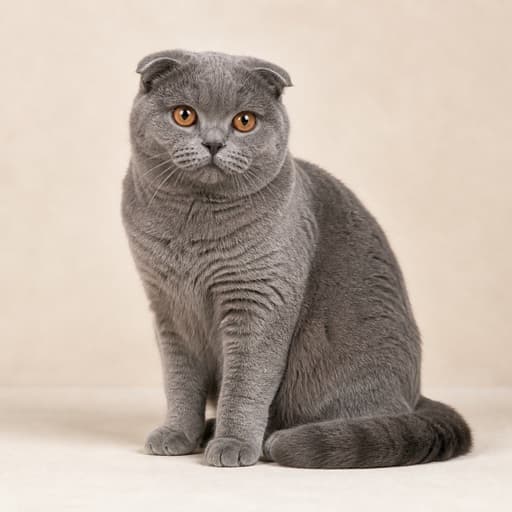
Who is this breed suited to?
This is a welfare-focused guide for understanding Scottish Folds and caring for existing cats. Their folded ears result from a mutation affecting cartilage and bone, not a harmless cosmetic difference. Consider adopting an existing cat with a veterinary care plan rather than commissioning breeding for folded ears.
Daily time commitment
Activity should follow the individual cat's comfort and veterinary advice. Observe walking, jumping, play and litter-tray access; reduced movement or reluctance to interact may reflect pain. Encourage comfortable low-impact play without forcing jumps or trying to meet an arbitrary exercise target.
Coat and everyday care
Arrange assessment of mobility and pain, and discuss accessible resting places and litter facilities. Gentle grooming may need extra help when joints restrict self-care. Never manipulate a stiff tail or limbs to demonstrate their flexibility, and seek advice when handling becomes uncomfortable.
Challenges to plan for
Scottish Fold osteochondrodysplasia can cause skeletal abnormalities and painful progressive arthritis. UC Davis explains that even one copy of the fold mutation can affect cartilage and bone; onset and severity vary. A straight-eared parent therefore does not make a folded-eared kitten free of this risk.
How does it compare?
A British Shorthair offers a round-faced, plush-coated comparison without selecting for the fold mutation. It still needs its own health assessment; the comparison is about avoiding this particular harmful feature, not promising a cat without medical problems.
Questions to ask a breeder
For an existing cat, ask the rescue or keeper for veterinary records, mobility observations, previous imaging and any pain-management plan. Discuss ongoing costs and follow-up with your veterinarian. Breeding assurances or a currently playful kitten cannot rule out later mutation-related problems.
Sources and further reading
- UC Davis Veterinary Genetics Laboratory: Scottish Fold mutation
- GCCF: Scottish Fold welfare concerns
- British Veterinary Association: pedigree cat welfare
- Cornell Feline Health Center: recognising joint pain
- CFA: British Shorthair appearance
Reviewed October 2026. Breed tendencies do not predict an individual cat. Age, health, upbringing and environment all affect care and behaviour.