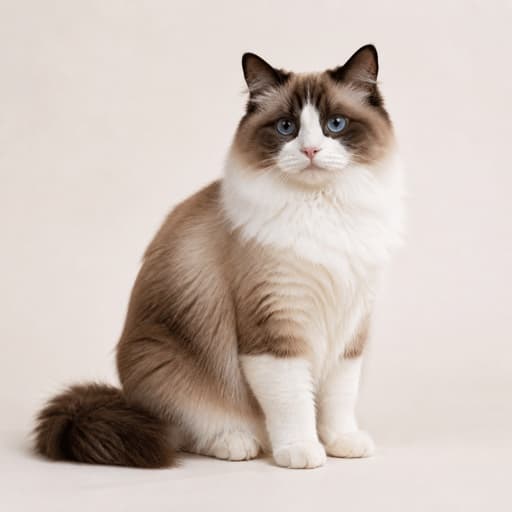
Who is this breed suited to?
The Ragdoll may suit someone who wants a large, sociable companion and can offer gentle interaction without expecting a permanently compliant lap cat. CFA explicitly notes that going limp when held is not typical of most modern Ragdolls. Support the body and respect attempts to leave.
Daily time commitment
Offer regular opportunities to stalk, catch and explore even when the cat seems content to lounge. Plan shared play around its responses and provide sturdy furniture and resting spaces suited to a substantial adult. A calm reputation is not a substitute for checking body condition.
Coat and everyday care
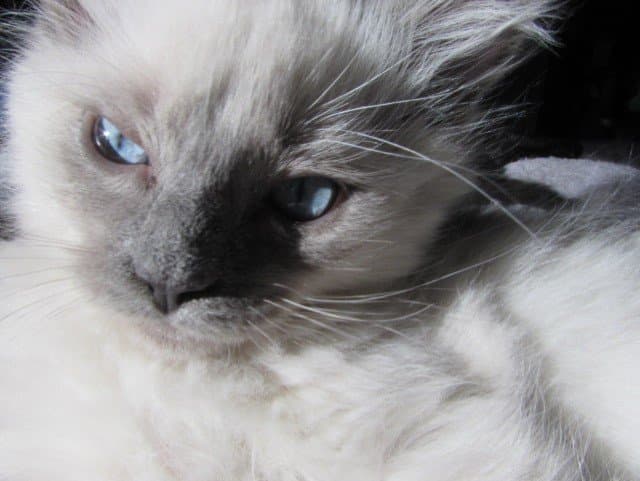
Comb the semi-long coat at least once or twice weekly, increasing attention when shedding or tangles warrant it. Its relatively limited undercoat usually differs from a densely coated Persian, but the belly and leg areas still need gentle inspection and early grooming practice.
Challenges to plan for
Hypertrophic cardiomyopathy is a relevant inherited-health concern. The available Ragdoll DNA test detects one specific associated mutation; a negative result is not a certificate excluding every cause of heart disease. Ask the veterinarian how genetic results and cardiac examinations fit together.
How does it compare?
The RagaMuffin shares part of the breed's development history but follows a separate standard and broader colour range. Compare the actual adults' coat, build and responses to handling instead of treating the two names as interchangeable.
Questions to ask a breeder
Request identifiable parental HCM genetic reports and information about veterinary cardiac assessment and family longevity. How do kittens react to grooming and normal household activity, and what support is offered if the cat's needs differ from expectations?
Sources and further reading
- CFA: Ragdoll
- UC Davis Veterinary Genetics Laboratory: Ragdoll HCM test
- Cornell Feline Health Center: hypertrophic cardiomyopathy
- CFA: Ragamuffin comparison
Reviewed October 2026. Breed tendencies do not predict an individual cat. Age, health, upbringing and environment all affect care and behaviour.