
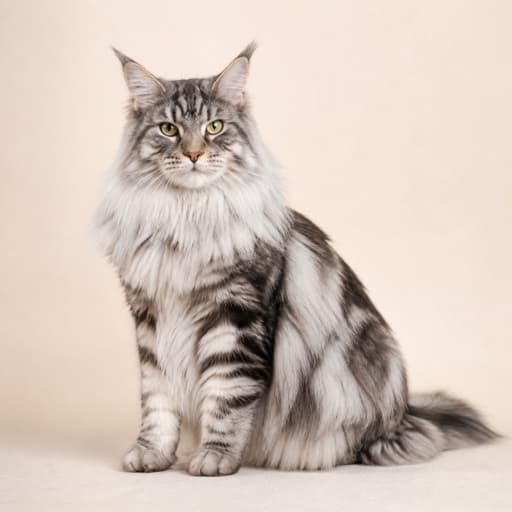
Who is this breed suited to?
The Norwegian Forest Cat suits someone prepared for a substantial climber that may enjoy company without constant handling.
Daily time commitment
Include climbing, chasing toys and periods of relaxed interaction. Secure high furniture and windows before the cat explores, and rotate safe objects to investigate.
Coat and everyday care
Comb through the thick double coat regularly, giving extra attention during seasonal shedding. Check the ruff, underside and furnishings rather than smoothing only the outer hair. Some individuals tangle more readily, so choose the routine by the actual coat, not a claim that forest cats never mat.
Challenges to plan for
The water-resistant coat can take time to wet and dry, making unnecessary baths inconvenient. Cold-weather ancestry is not a reason to leave the cat exposed outdoors.
How does it compare?
The Maine Coon is another large, longhaired companion. The Norwegian's triangular head and straight profile differ from the Maine Coon's square muzzle, while both need sound climbing furniture and hands-on coat maintenance. Individual sociability is more useful than national-origin stereotypes.
Questions to ask a breeder
Ask about parental glycogen storage disease screening and cardiac assessment, and request the actual reports and family health history. Have the breeder demonstrate seasonal grooming and explain kitten socialisation. A healthy-looking youngster does not reveal every inherited condition or its future care needs.
Sources and further reading
Reviewed October 2026. Breed tendencies do not predict an individual cat. Age, health, upbringing and environment all affect care and behaviour.