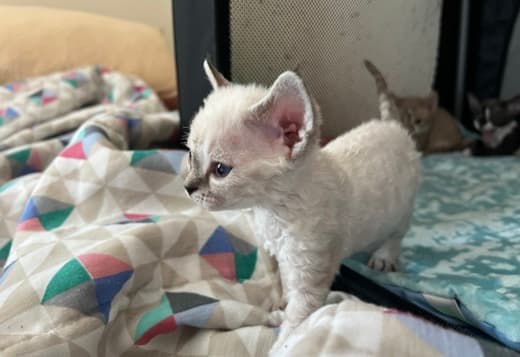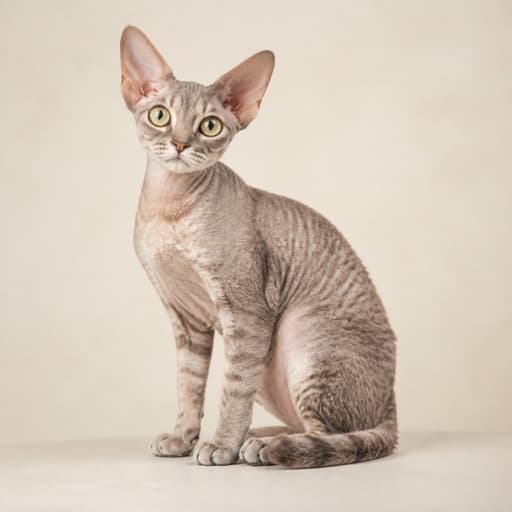
Who is this breed suited to?
A Devon Rex may suit people who enjoy a cat following them, investigating their activities and seeking close contact. Its large ears and elfin expression accompany a muscular, active body.
Daily time commitment
Offer shared games, climbing and chances to learn simple tasks. Secure tempting food and check household spaces before closing doors or appliances when a curious cat is nearby.
Coat and everyday care
The wavy coat varies in density and can be fragile, including the whiskers. Use gentle handling rather than vigorous brushing. Ask about normal coat changes in the line, but have new irritation or hair loss assessed instead of automatically blaming the breed.
Challenges to plan for
Devons are not hypoallergenic, despite claims associated with their sparse coat. Strong interest in people can also make them a poor match for a household seeking distance. Introduce other pets carefully and give everyone separate resting and feeding options.
How does it compare?
The Cornish Rex has a different coat mutation and lacks the sparse guard hairs found in the Devon. Head shape and ear placement also differ.
Questions to ask a breeder
Ask how the breeder checks parental blood types and manages compatibility, a concern identified by CFA for this breed. Request other health-screening records, family history and kitten veterinary documentation.
Sources and further reading
Reviewed October 2026. Breed tendencies do not predict an individual cat. Age, health, upbringing and environment all affect care and behaviour.