Many cats groom themselves effectively and do not need routine full baths. Discomfort with bathing can involve restraint, slippery footing, unfamiliar sounds and the sensation of a wet coat. Reactions differ: some cats investigate water calmly, while others find the whole experience frightening.
Do not generalize from wild cats
A fishing cat is a wild species, not a domestic breed whose needs should be copied at home. Domestic cats do not need live fish or crayfish placed in a bath for hunting practice. Claims that every Siamese or other named breed enjoys swimming are also unreliable.
A cat watching a tap or touching water with a paw is not necessarily agreeing to immersion. Let curiosity remain voluntary and provide safe play that does not require entering deep water.
When a bath may help
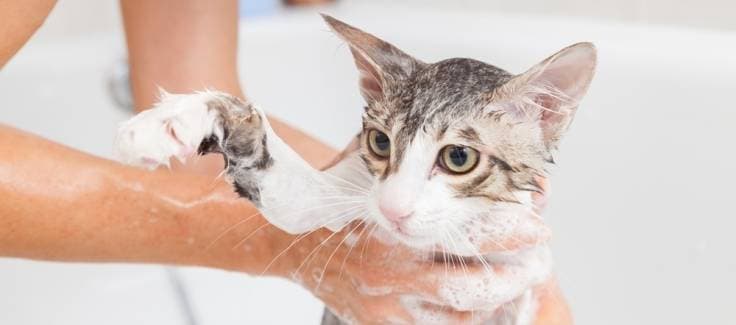
VCA's guidance on bathing kittens explains that healthy cats usually do not require regular washing. A veterinarian may recommend bathing for a particular skin condition, or a cat may need help after becoming soiled. Reduced grooming can itself be a reason to investigate pain or illness.
If a potentially toxic substance gets on the coat, contact a veterinarian immediately. Prevent licking if this can be done safely and follow instructions for that specific exposure. A general shampoo routine may not be appropriate.
Prepare before starting
Choose a quiet, comfortably warm room and a secure, non-slip surface. Gather towels and a cat-appropriate product before handling the animal. Avoid human shampoos, strong fragrances and unapproved essential oils.
Use comfortably lukewarm water and keep it away from the face and ears. Do not force a struggling cat into a deep container or continue until either of you is injured. Ask the veterinary team for help if prescribed bathing cannot be performed safely.
Keep the experience manageable
Gentle spot-cleaning may be enough for a small dirty area. If a full wash is necessary, work calmly, rinse thoroughly and towel-dry without rough rubbing. Keep the cat comfortable while drying, avoiding excessive heat or a noisy dryer that causes distress.
A wet coat can affect comfort and insulation, but cats do not have a unique system that guarantees comfort in every season until water touches them. Temperature, coat condition, health and the surroundings all influence how they cope.
Build cooperation gradually
Practice brief handling and contact with a dry bath surface before water is needed. Reward calm participation and end on an easy step. This preparation is more useful than repeated forced baths intended to teach the cat to tolerate them.
Notice redness, sores, odor or persistent scratching and seek an examination. More frequent washing is not a substitute for diagnosing a skin problem. The aim is appropriate hygiene with the least stress needed for the individual cat.