
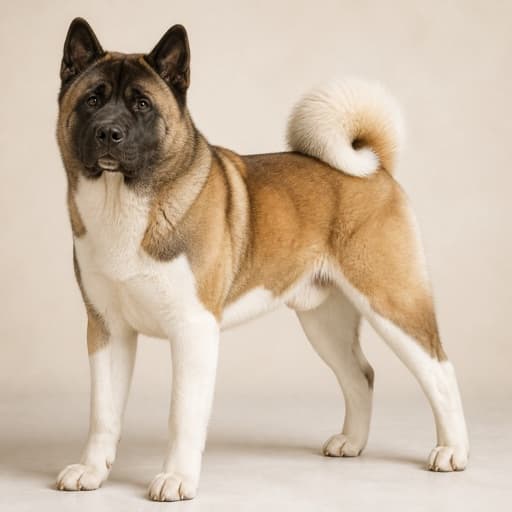
Who is this breed suited to?
Consider an American Akita if you have room and handling experience for a large, strongly built spitz. Spend time with adults and discuss the household's dogs, visitors and daily routines before selecting a puppy.
Daily time commitment
The Royal Kennel Club's Akita guide uses more than two hours of daily adult exercise. Allocate time for lead training and interaction as well as walks, and introduce increases in workload gradually.
Coat and everyday care
The short outer coat still sits over substantial undercoat. Brush weekly or more often when shedding increases, and teach the dog to accept examination of its feet and body without restraint becoming a struggle.
Challenges to plan for
Managing adult strength matters even when the dog is calm at home. Plan controlled introductions and a secure resting area for busy occasions; favourable breed descriptions cannot guarantee compatibility with every animal.
How does it compare?
The American Akita developed a heavier-boned, more substantial outline than the Japanese Akita Inu. The two are separated in the Royal Kennel Club system, so clarify the breeder's type rather than relying on the word Akita alone.
Questions to ask a breeder
Which Akita type is recorded in the pedigree? Can I observe the parents' behaviour with people and dogs? Ask how puppies learn lead handling, what health screening is documented, and what support is available after placement.
Sources and further reading
Reviewed October 2026. Breed tendencies are not a prediction for an individual dog. Exercise guidance concerns healthy adults; age, condition and weather change the plan.