
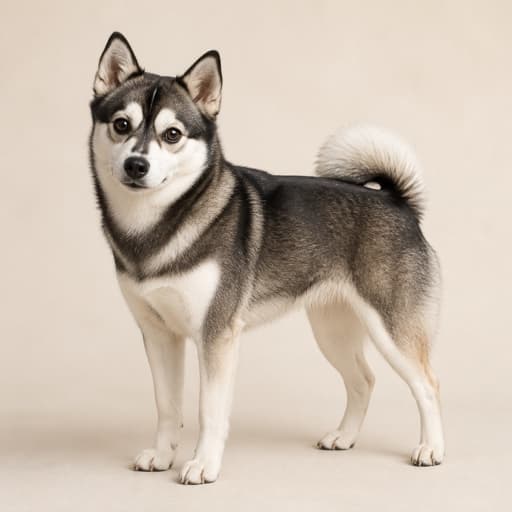
Who is this breed suited to?
An Alaskan Klee Kai may interest someone who wants a smaller northern-type companion and enjoys an alert, observant dog. Small stature does not automatically make it comfortable in a busy household full of unfamiliar visitors.
Daily time commitment
The UKC standard does not establish a daily exercise duration. Ask about the specific adults' routine, and plan walks, interactive play and brief confidence-building sessions every day, with company beyond those activities.
Coat and everyday care
Work through the double coat regularly and increase brushing as undercoat is shed. Ask the breeder to demonstrate the difference between routine surface brushing and removing loose undercoat without pulling.
Challenges to plan for
The standard describes alertness and possible territorial responses. Practise quiet settling and gradual introductions, and assess noise sensitivity and barking in the actual home rather than assuming a miniature husky appearance means effortless apartment living.
How does it compare?
The Klee Kai was developed as a companion-sized northern spitz type. It is not simply a Siberian Husky puppy that stays small; compare the adults' social behaviour, size variety and everyday needs separately.
Questions to ask a breeder
Which size variety are the parents, and how do they react to strangers? What experiences have the puppies had with household noises and brief separation? Request the parents' health records and a coat-care demonstration.
Sources and further reading
Reviewed October 2026. Breed tendencies are not a prediction for an individual dog. Exercise guidance concerns healthy adults; age, condition and weather change the plan.